Crème Fraîche Starter Culture | Authentic French Probiotic | Zoh Probiotics
Authentic French-style Crème Fraîche — silky, mildly tangy, made from cream and a single sachet at home.
🌍 Ships next business day worldwide · 🇮🇳 1–4 days India · 🇦🇪 5–9 days UAE · 🇸🇬🇲🇾 5–9 days SEA · 🇬🇧🇫🇷🇮🇪 7–14 days EU · 🇺🇸🇬🇧🇨🇦🇦🇺 7–14 days
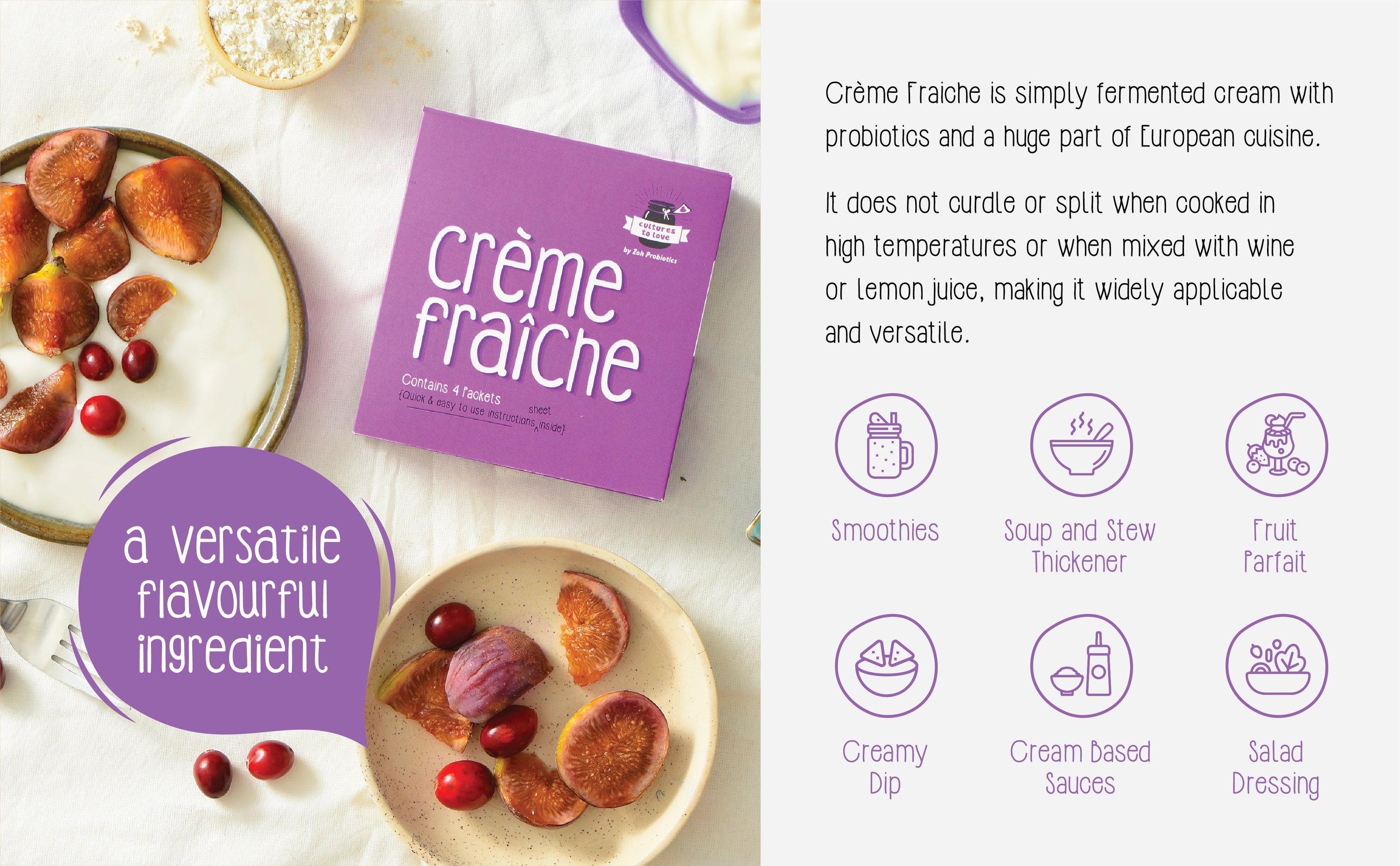
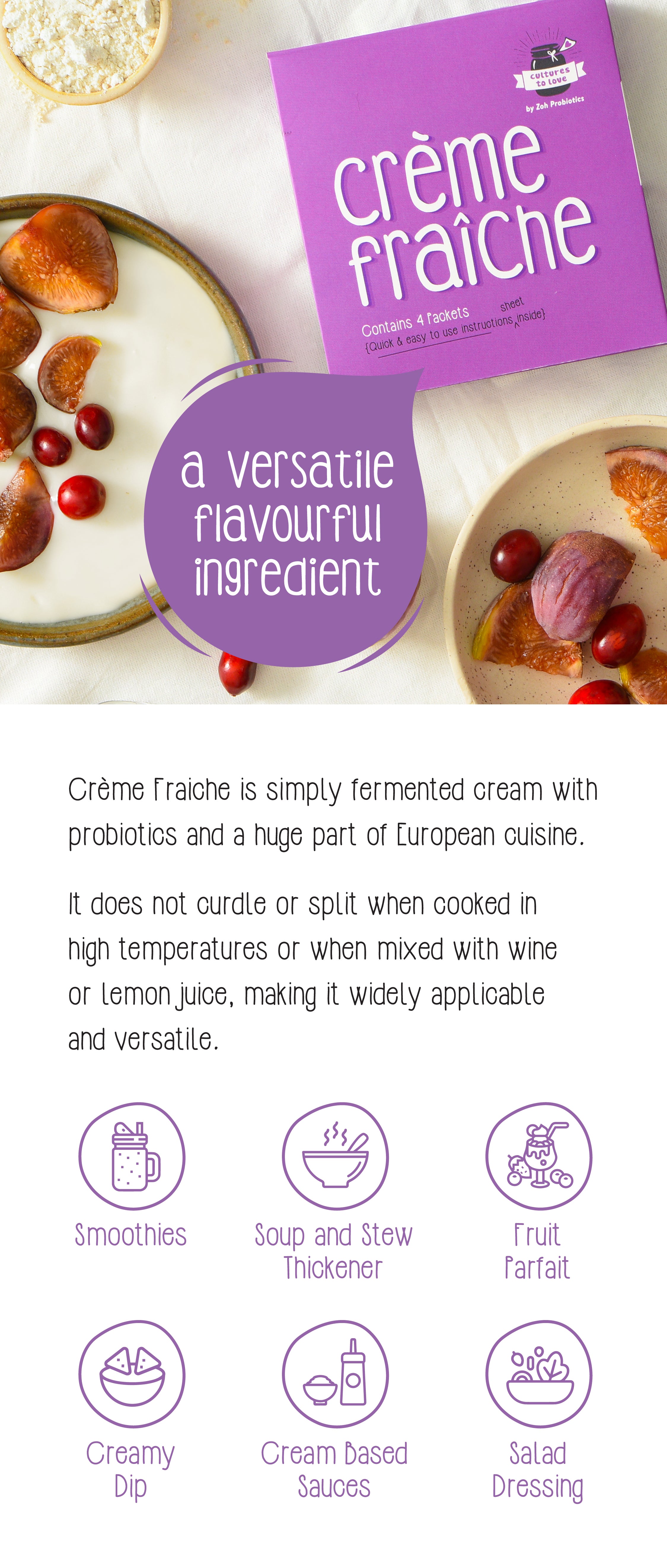
Crème fraîche is the foundation of much of French cooking. Spooned over fresh fruit, stirred into pasta sauces, dolloped on baked potatoes, mixed into salad dressings, drizzled over soups — it is the more sophisticated cousin of sour cream, with a higher fat content (28–40%), a milder, nuttier tang, and a remarkable resistance to curdling when added to hot dishes.
In India and across the GCC, SEA, US, and even the UK, store-bought crème fraîche is hard to find, expensive when you do find it, and often imported and weeks old. Making your own takes 24 hours, costs less than a fifth of retail, and produces a markedly fresher product. Zoh's heirloom crème fraîche starter is the only thing you need.
Why crème fraîche is better than sour cream
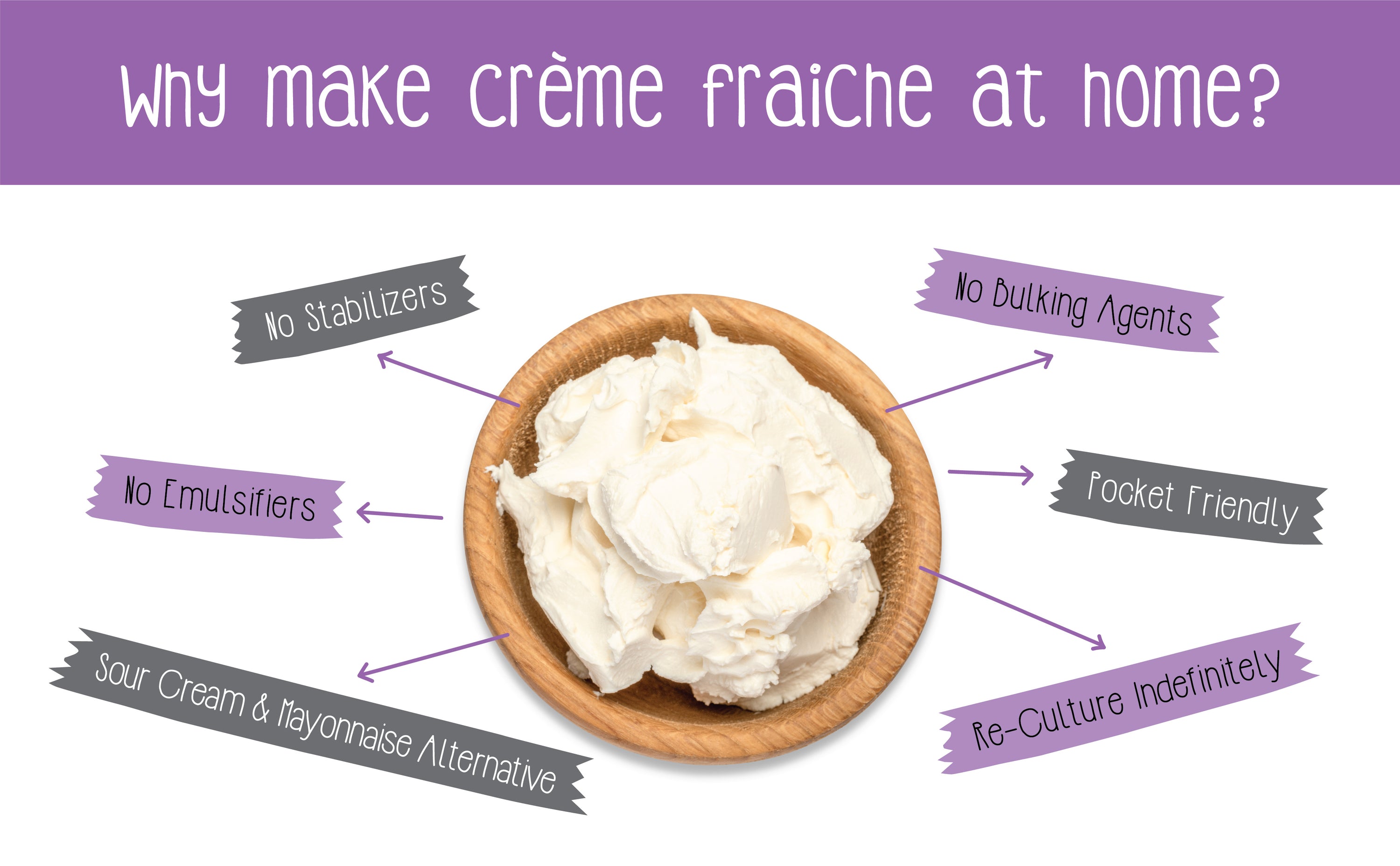
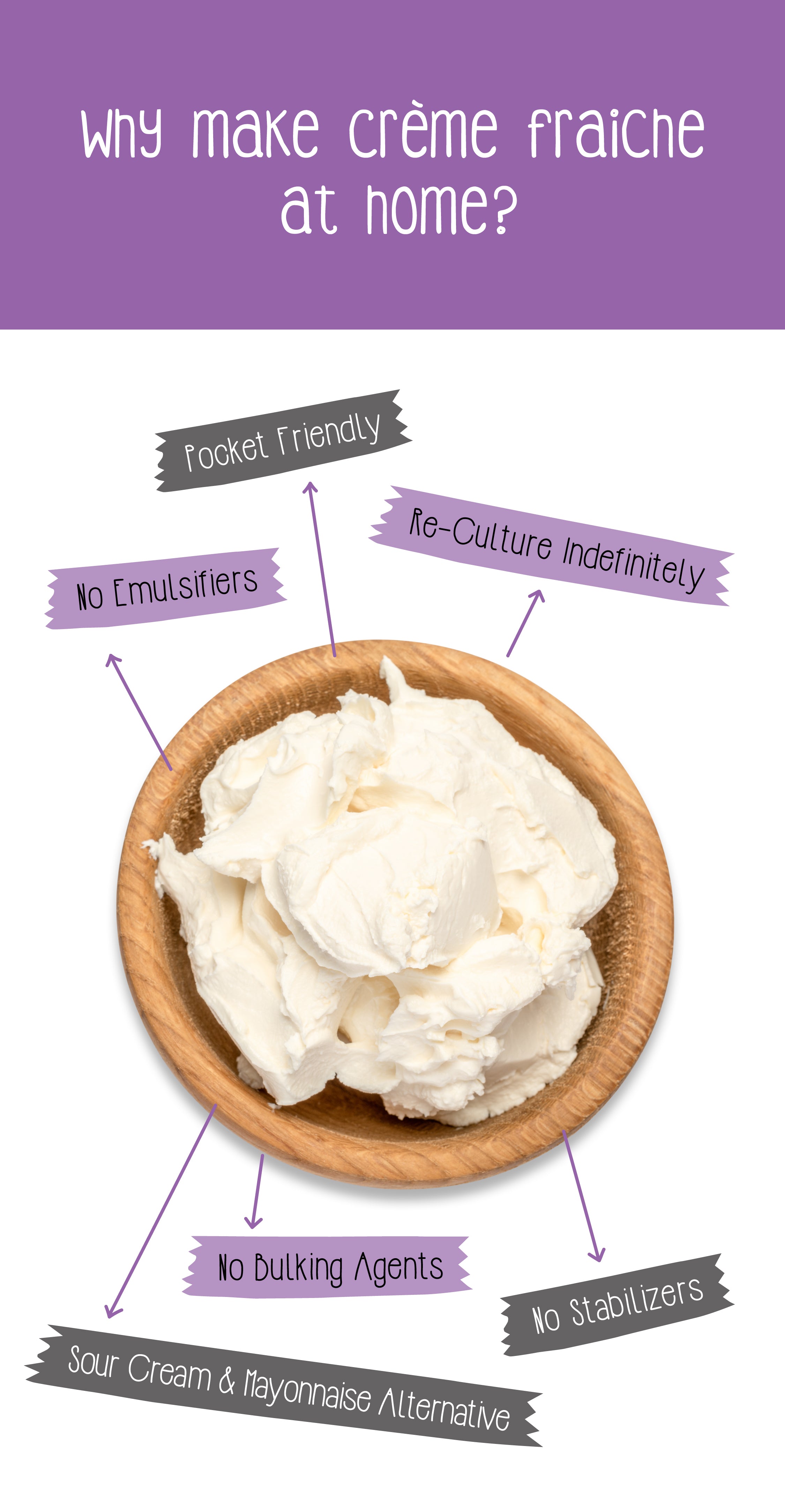
Sour cream is made with cultures that produce a sharper, more acidic profile and lower fat content (around 18–20%). Crème fraîche uses a different bacterial blend — mesophilic Lactococcus lactis subspecies and Leuconostoc — producing a milder tang and significantly higher fat. The practical consequences:
- Doesn't curdle when heated: You can stir crème fraîche directly into hot pasta sauces, soups, and curries. Sour cream curdles — crème fraîche stays silky.
- More versatile: Works in both sweet and savoury preparations. The mild tang doesn't dominate.
- Richer mouthfeel: The higher fat creates a luxurious texture that sour cream can't match.
- Long fridge life: Once made, keeps 2 weeks refrigerated.
What's inside
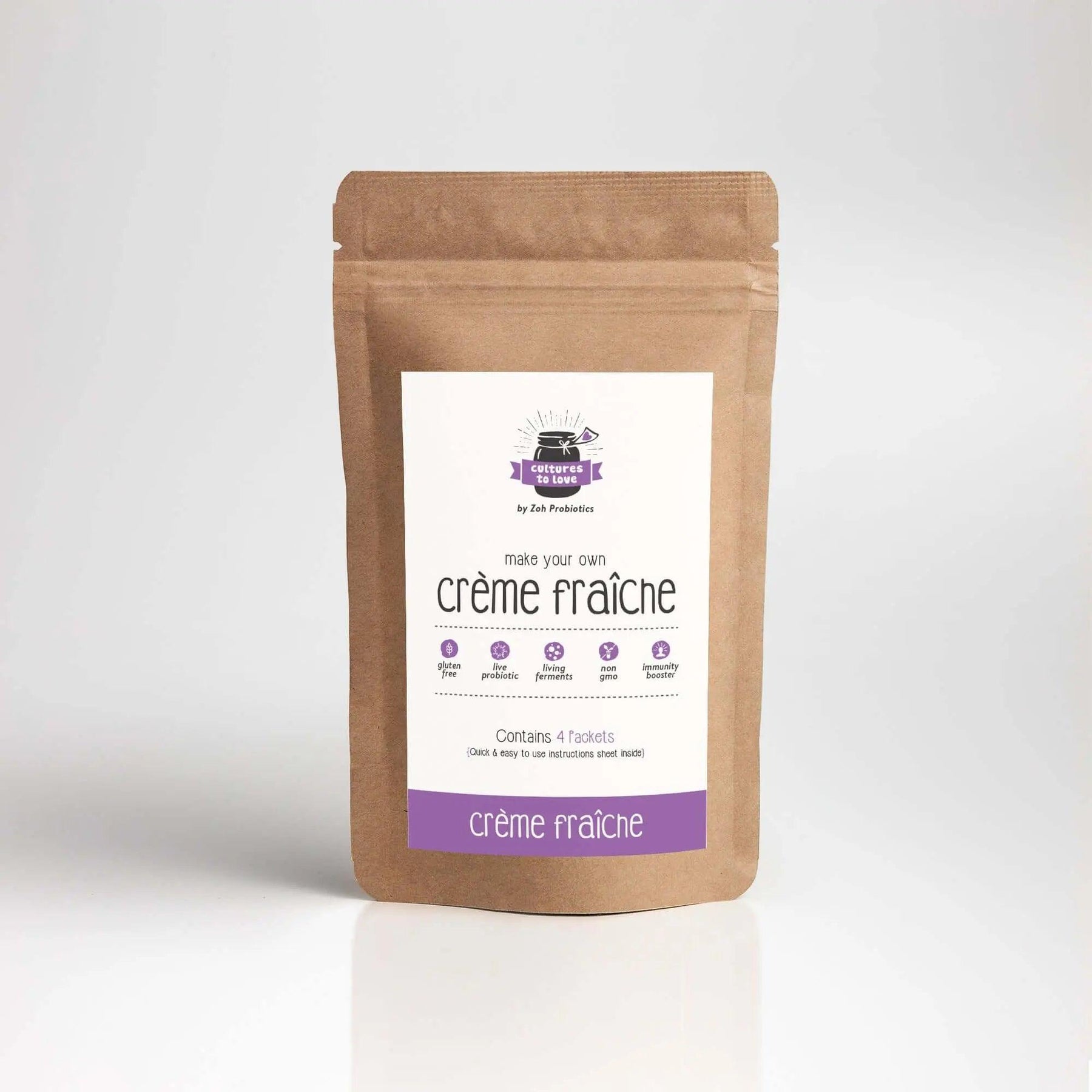
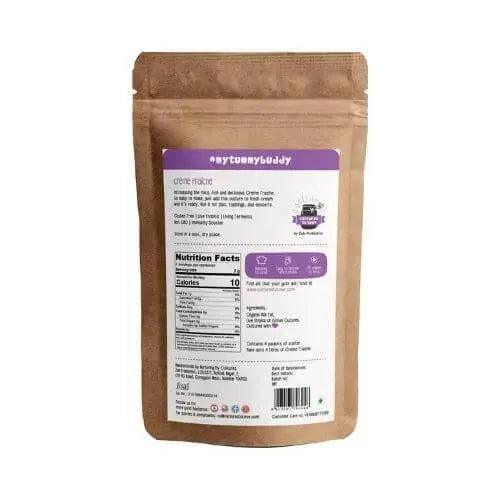
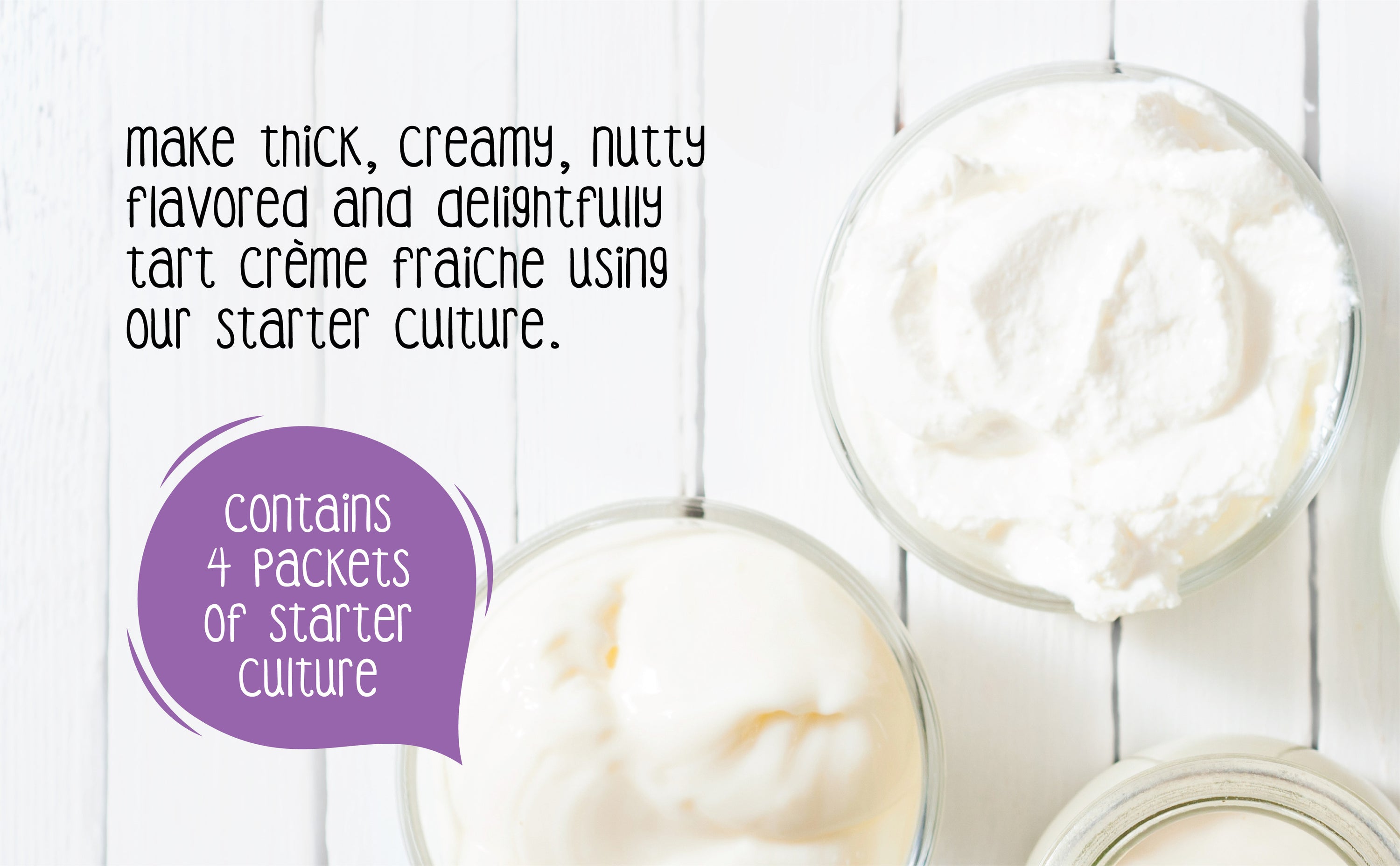
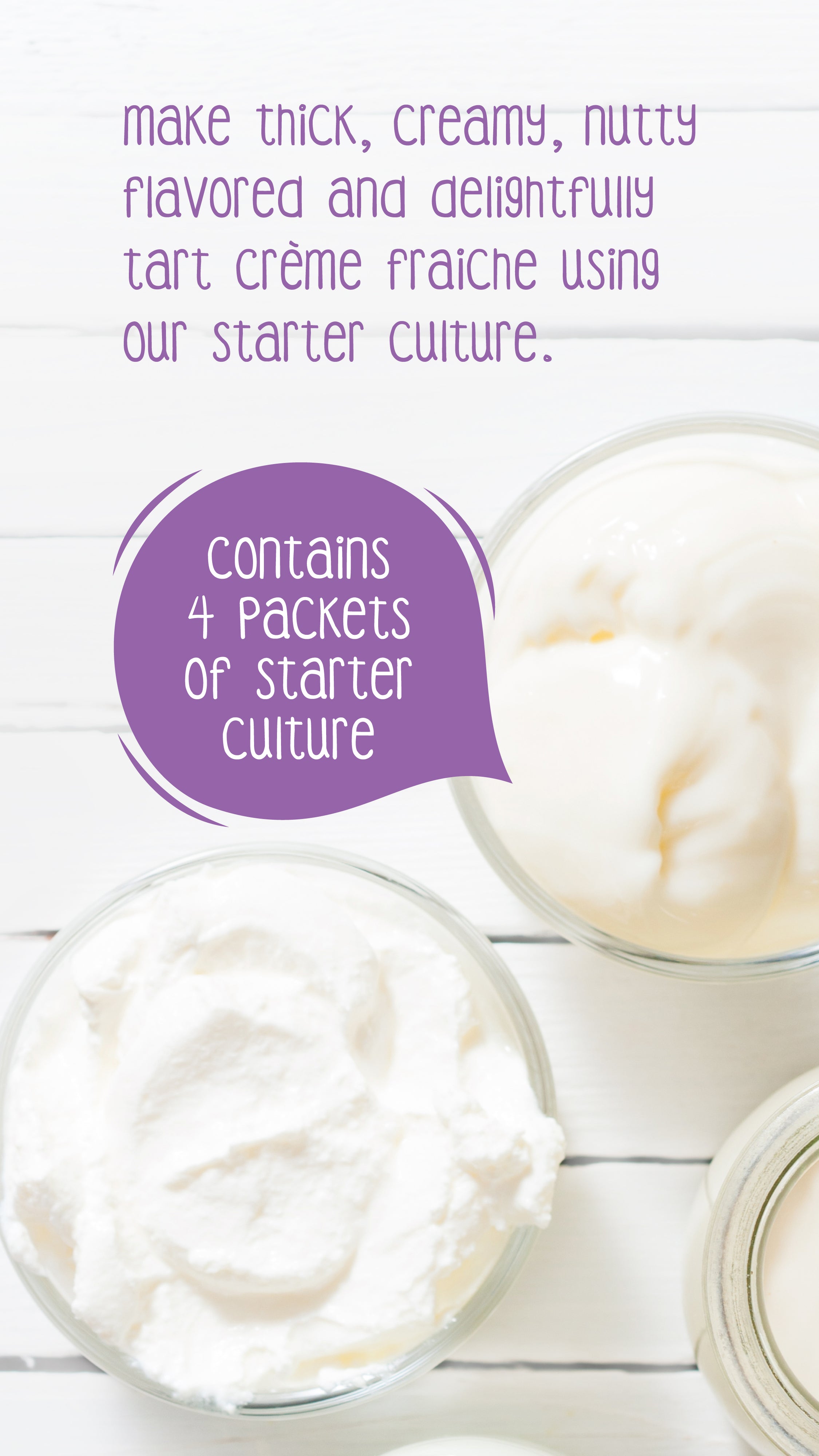
2 sachets of freeze-dried crème fraîche starter culture.
One sachet ferments up to 1 litre of cream into crème fraîche. The starter is heirloom-grade — once you've made your first batch, you can save 2 tablespoons to start the next batch indefinitely.
How to make crème fraîche at home
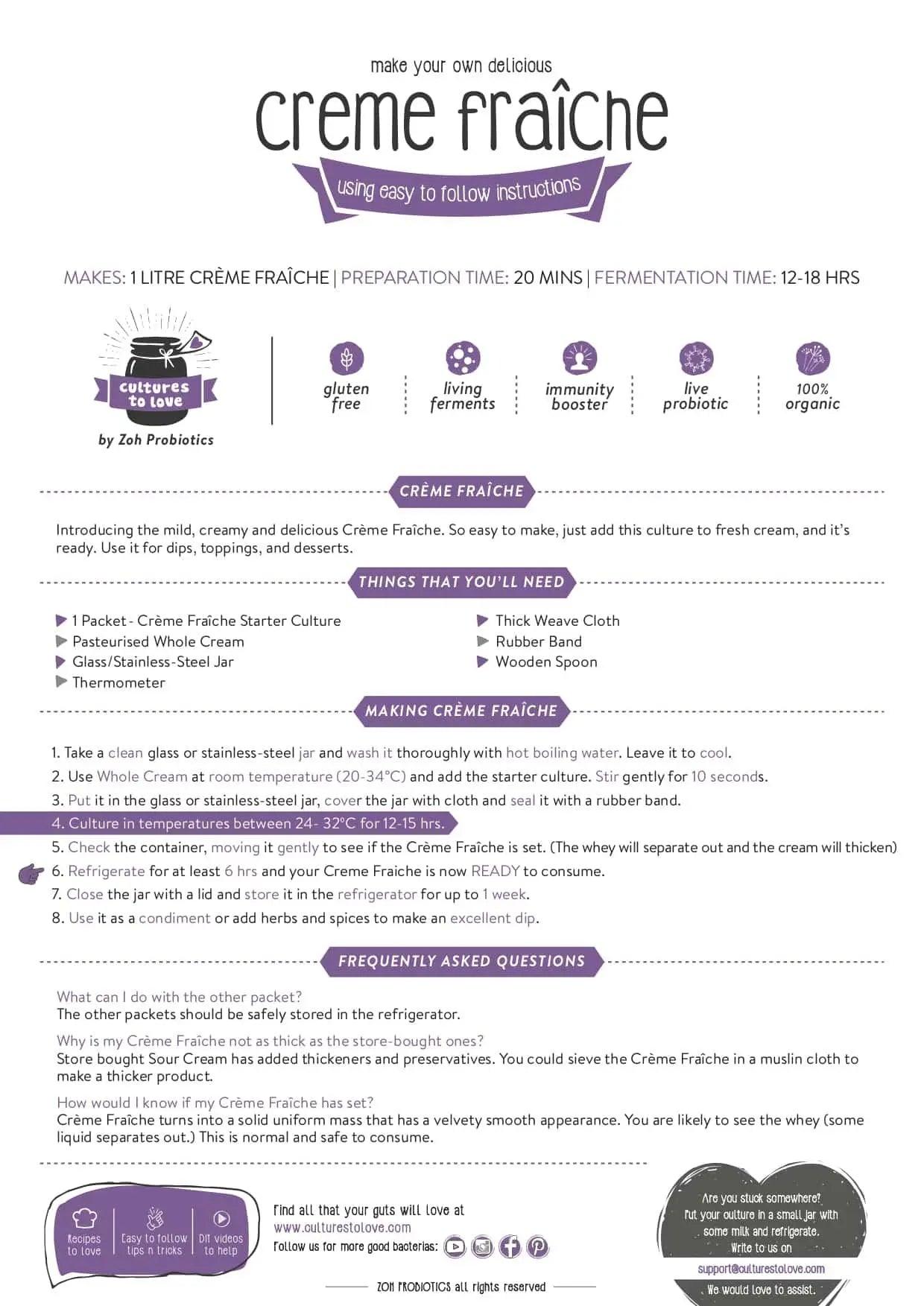
Step 1 — Warm fresh cream (the higher the fat content the better — ideally 30%+) to 22–24°C — just slightly above cool room temperature.
Step 2 — Whisk in the starter culture until fully dissolved.
Step 3 — Cover loosely with a cloth or breathable lid. Leave at room temperature (20–24°C) for 12–24 hours, until thickened and mildly tangy.
Step 4 — Refrigerate for at least 6 hours before using. Refrigeration completes the texture development. Use within 2 weeks.
Cream sources by region
- India: Amul fresh cream (25% fat works, 35% is better), Mother Dairy fresh cream, or top-skimmed cream from full-cream milk left overnight
- UAE / GCC: Al Marai whipping cream, Al Ain heavy cream — fresh pasteurised, not UHT
- UK / EU: Whipping cream or double cream both work brilliantly. Higher-fat double cream produces particularly luxurious results.
- US / Canada: Heavy whipping cream (35–40% fat) is ideal. Avoid "ultra-pasteurised" if possible — it inhibits cultures.
- Australia: Pure cream or thickened cream both work; pure cream is preferred.
- SEA: Imported European or Australian cream is most reliable. Avoid coconut cream substitutes — the cultures need dairy fat.
What to do with homemade crème fraîche
- Stir into hot pasta sauces — carbonara variants, mushroom cream sauces, tomato-based sauces. Adds richness without curdling.
- Spoon over fresh fruit — strawberries, peaches, mangoes (Indian summer pairing). With a drizzle of honey, an instant elegant dessert.
- Dollop on baked potatoes, soups, chillies — elevated comfort food.
- Whisk into salad dressings — a tablespoon transforms a vinaigrette.
- Indian fusion uses — dolloped on dal makhani, stirred into butter chicken at finishing, mixed into shrikhand alternatives. The mild tang complements rich Indian flavours beautifully.
- Bake into scones, biscuits, cakes — crème fraîche-based baked goods are markedly tender and rich.
Who is this for?
- French-cuisine lovers in India, GCC, SEA who can't reliably source fresh crème fraîche
- French expats abroad who miss the fresh-from-the-fridge European version
- Serious home cooks tired of paying premium imported prices
- Bakers and dessert-makers who want a versatile, high-fat fermented dairy
- Indian households seeking richer alternatives to dahi/curd for fusion cooking
- Fermentation enthusiasts looking to expand beyond yogurt and kefir into European dairy traditions
India's first fermentation cultures company. Trusted across the region.
Zoh is India's first fermentation cultures company — and the largest fermentation knowledge hub for South Asia, the Middle East, and Southeast Asia. Our crème fraîche starter contains authentic mesophilic cultures, third-party tested for purity and viability. Heirloom-grade — the culture propagates indefinitely from your first batch.
🌍 International shipping & delivery
We ship the next business day, every business day. Freeze-dried crème fraîche starter is shelf-stable for up to 12 months at room temperature and survives international transit easily. Delivery times by destination:
- India: 1–4 business days · free shipping on most orders
- UAE, Saudi Arabia, Kuwait, Qatar, Oman, Bahrain: 5–9 business days
- Singapore, Malaysia, Indonesia, Thailand, Philippines, Vietnam, Hong Kong: 5–9 business days
- UK, Ireland, France, Germany, Italy, Spain, EU: 7–14 business days
- US, Canada, Australia, New Zealand: 7–14 business days
- Pakistan, Bangladesh, Sri Lanka, Nepal: 4–8 business days
Customs: Freeze-dried dairy starter is classified as a food product and clears customs without issue. Full documentation included.
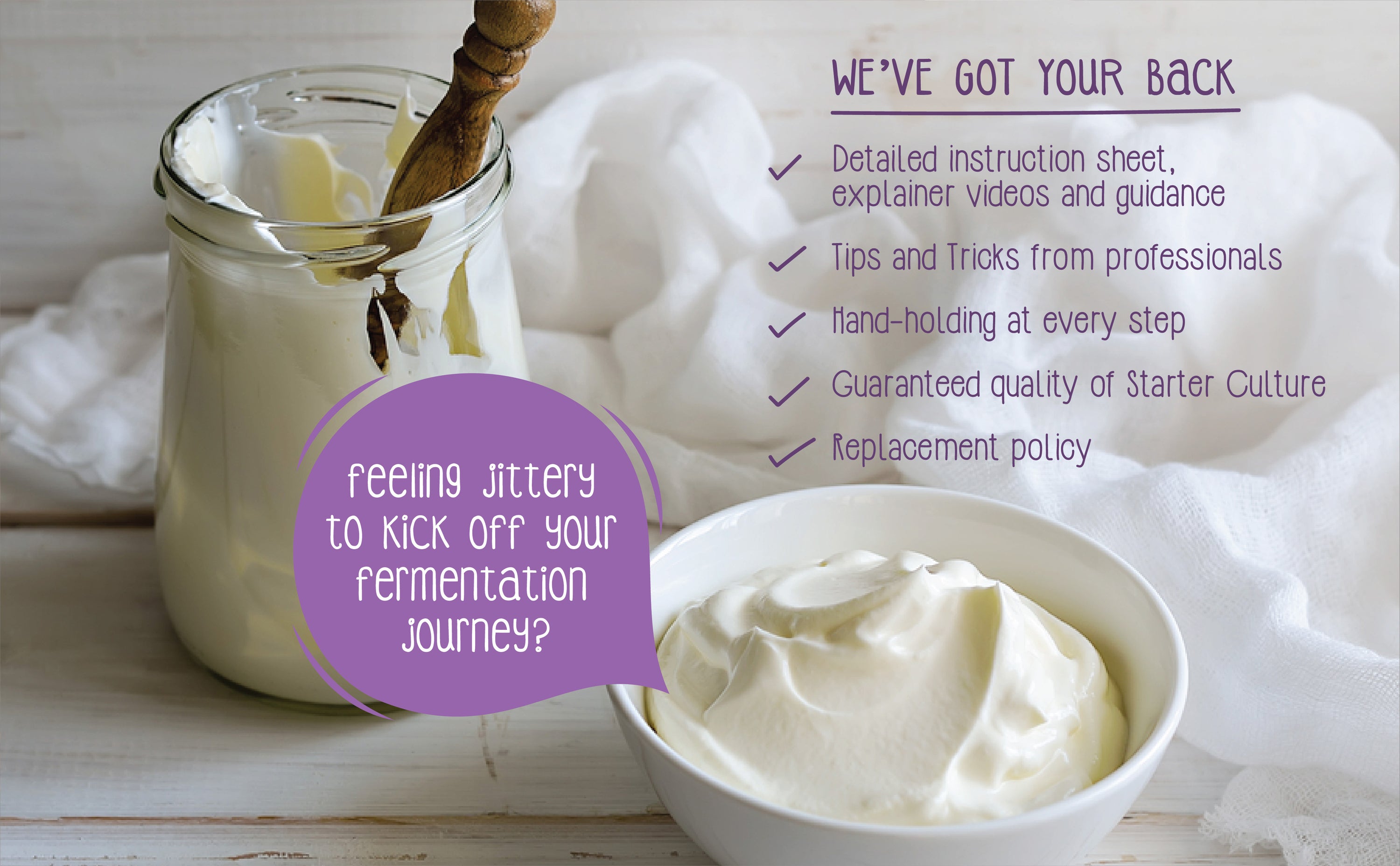
We’re here to help your ferment succeed. We want your ferment to succeed. Contact support@zohprobiotics.com with your order number, photos and the steps you followed so we can troubleshoot together. If we identify a fault with the culture supplied by Zoh, we’ll provide a replacement culture free of cost. Following the product’s storage and fermentation instructions is essential; replacements are reviewed individually and may be declined where instructions weren’t followed, conditions were unsuitable, information is insufficient or requests indicate misuse. International replacement shipping and any import charges are payable by the customer. We do not accept returns, even unopened. See our returns and replacement policy.
Frequently Asked Questions
How is crème fraîche different from sour cream?
Crème fraîche has higher fat (28–40% vs sour cream's 18–20%) and milder, nuttier tang. The most practical difference: crème fraîche doesn't curdle when added to hot dishes, while sour cream does. This makes it dramatically more versatile in cooking.
What cream works best for crème fraîche?
Higher fat is better. Ideal: 35–40% fat heavy cream or double cream. Will work with 25% but produces thinner results. Avoid UHT (ultra-pasteurised) cream where possible — it inhibits the cultures and gives unreliable results.
How long does homemade crème fraîche keep?
Up to 2 weeks refrigerated. The flavour deepens and tartness slowly increases over time. Use earlier for milder flavour, later for sharper character.
Can I reculture from my own crème fraîche?
Yes. Save 2 tablespoons of finished crème fraîche to start your next batch. The culture stays viable indefinitely with proper handling. Every 4–6 batches, refresh from a new sachet to keep the culture vigorous.
Will the starter survive shipping to UAE / Singapore / EU / US?
Yes. Freeze-dried crème fraîche starter is shelf-stable at room temperature for up to 12 months and tolerates international transit easily — including warm climates. We’ll help troubleshoot any culture issue. Approved replacement cultures are free; international shipping and import charges are payable by you. Our replacement policy applies.
Clearing the Clutter
Article
Article
Article
Creme Fraiche in 3 Steps


FAQ
Know your Ferments
Know your Facts
How can I flavour my Crème Fraîche?