Front packaging of Zoh Probiotics Milk Kefir Starter Culture
Milk kefir made with Zoh Probiotics Milk Kefir Starter Culture
Back of Zoh Probiotics Milk Kefir Starter Culture packaging
Four-step guide for making milk kefir with Zoh Probiotics starter culture
Zoh Probiotics Milk Kefir Starter Culture product features
Side panel of Zoh Probiotics Milk Kefir Starter Culture packaging
Milk kefir culture information from Zoh Probiotics
Zoh Probiotics Milk Kefir Starter Culture for home fermentation
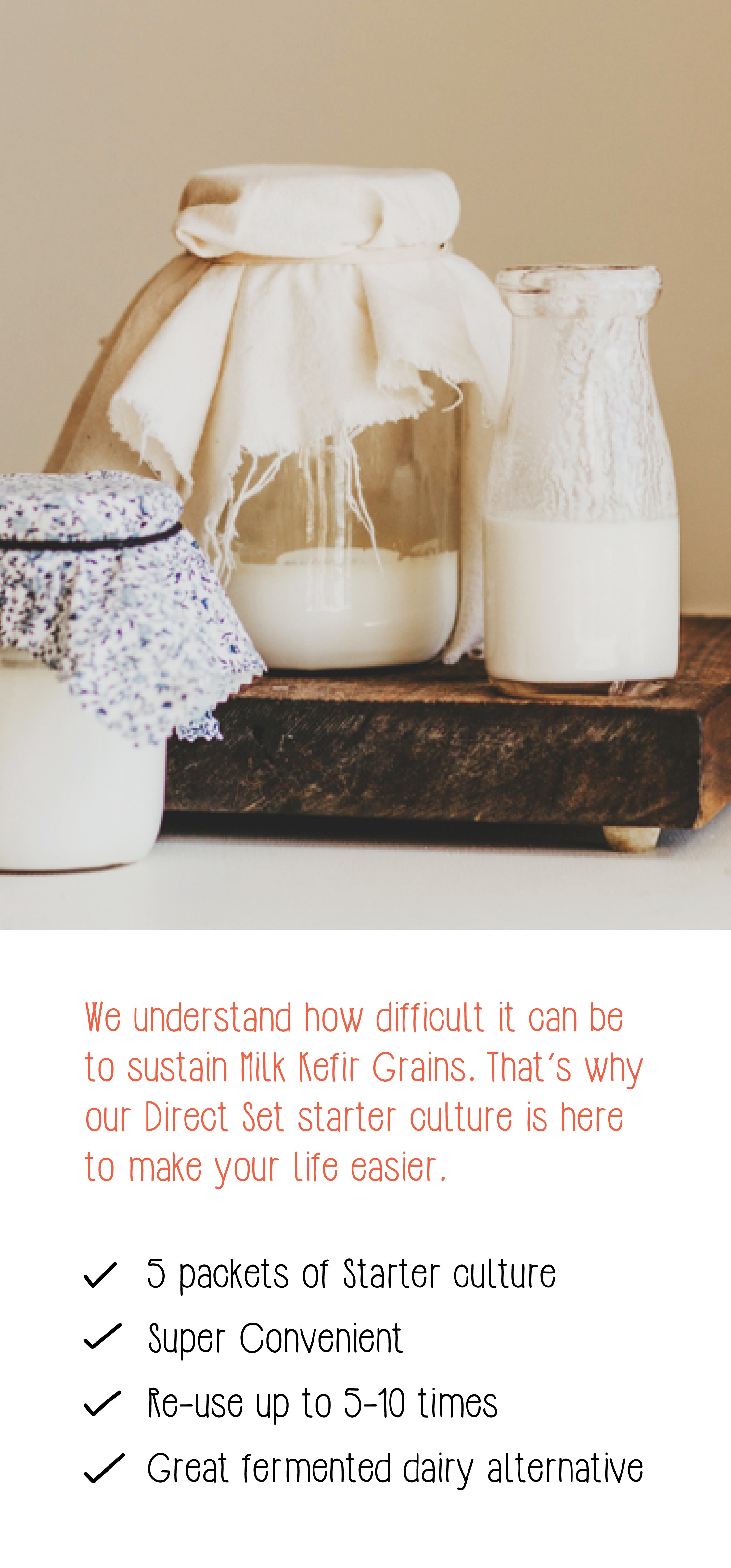
Creamy milk kefir made at home with Zoh Probiotics starter culture

Milk Kefir Starter Culture | Authentic Kefir at Home | Zoh Probiotics

Sale priceRs. 555 Regular priceRs. 600
Save 8%

Tax included. Shipping calculated at checkout

Quantity:

Make authentic milk kefir at home — simple, repeatable, and ready in about 12–24 hours.

🌍 International shipping · Ships worldwide · See checkout for destination-specific delivery options

📖 New to kefir? Start with our complete kefir guide, or use the milk kefir troubleshooting guide for fermentation steps, milk selection and common problems.

Zoh Milk Kefir Starter Culture is a freeze-dried starter for making milk kefir at home. It is designed for people who want the convenience of a powdered starter rather than maintaining living kefir grains.

What's inside

5 sachets of freeze-dried milk kefir starter culture. Follow the batch instructions supplied with your culture for the recommended milk volume and reculturing method.

How to make milk kefir

1. Bring your milk to the recommended starting temperature.
2. Add the starter and mix thoroughly.
3. Cover and ferment at room temperature until the kefir reaches the desired consistency and acidity.
4. Refrigerate before serving.

Fermentation time varies with temperature, milk and culture activity. In warmer rooms it can progress faster; in cooler rooms it can take longer.

For India-specific seasonal and city guidance, see our Kefir in India: City-by-City Climate & Fermentation Guide.

Why use a starter culture?

  • No daily grain maintenance for the first batch
  • Convenient freeze-dried format
  • Simple home fermentation process
  • Suitable for beginners and experienced fermenters
  • Useful for home kitchens, recipe development and repeatable small-batch fermentation

Milk options

Whole dairy milk is the simplest place to start. Milk characteristics affect fermentation speed, thickness and flavour, so use the guidance in our milk kefir guide when experimenting with different milks.

Starter culture vs kefir grains

Starter culture: convenient sachet format and straightforward first batches.
Kefir grains: a living culture that can be maintained and reused continuously with regular feeding and straining.

Need help?

Use our milk kefir guide and troubleshooting resources for fermentation timing, texture, temperature and batch problems.

For a research-focused overview intended for clinicians, dietitians and evidence-minded readers, see the Kefir Evidence & Clinician Resource.

Want to buy kefir culture for your business?
See our kefir wholesale & export information for current specifications, MOQ and documentation.
Clearing the Clutter

Article

Article

Article

Kefir in 4 Steps
Add Kefir Starter culture

In a glass jar combine 1L Milk and empty 1 (out of the 5) packet of Kefir starter culture into it. Mix with a wooden/ plastic spatula.

Ferment

Leave the mixture to ferment at 20-29 degrees for 24-36 hrstill it sets. Intermittently check if the kefir has set which is when it acquires a thick curd-like consistency

Refrigerate

Once the kefir has set, refrigerate the jar with a lid for 8 hrs. Kefir is ready.

Re-Culturing

Keep aside 3 tbsp of Kefir to re-culture. Repeat the process.

FAQ

Know your Ferments
Know your Facts

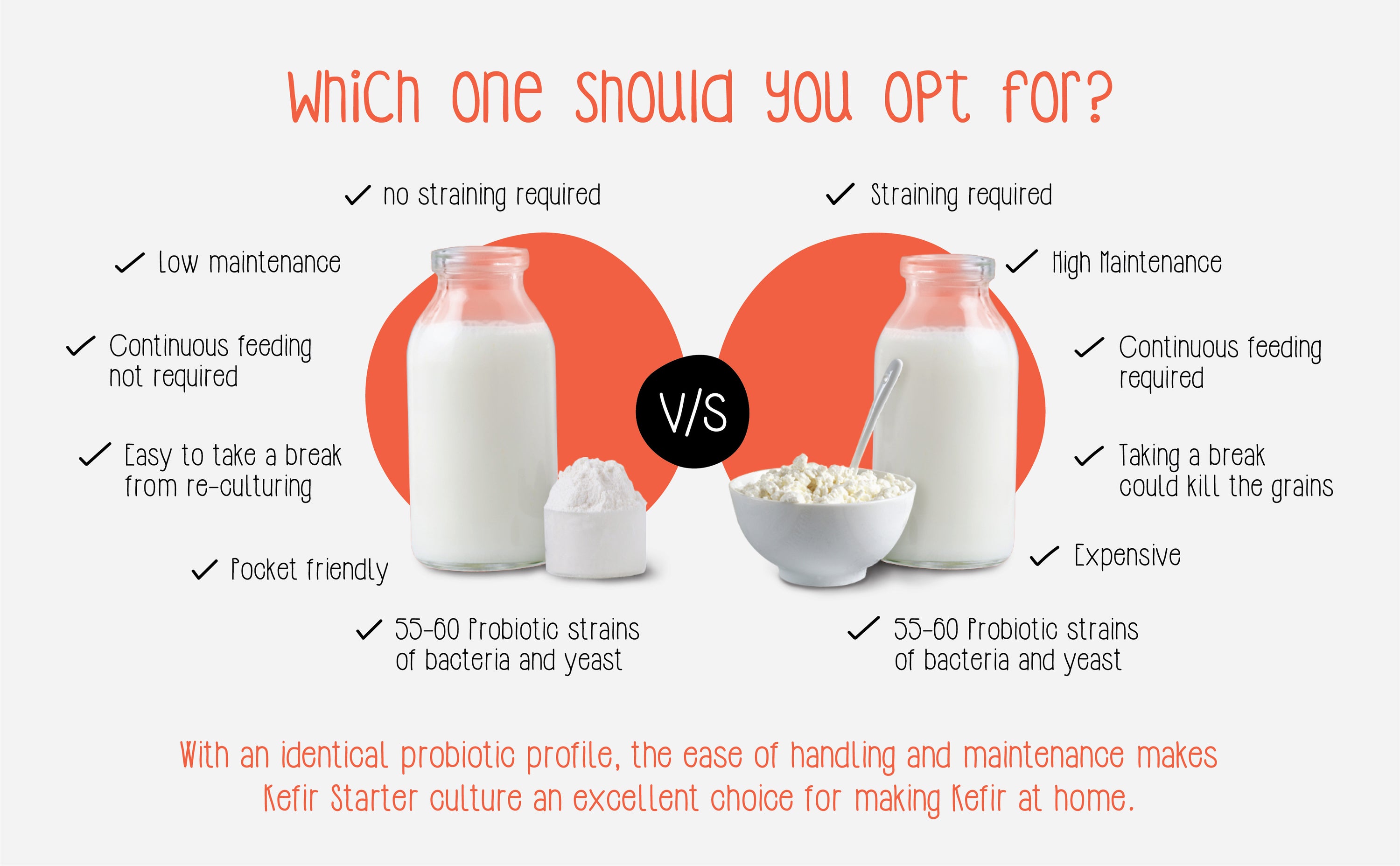
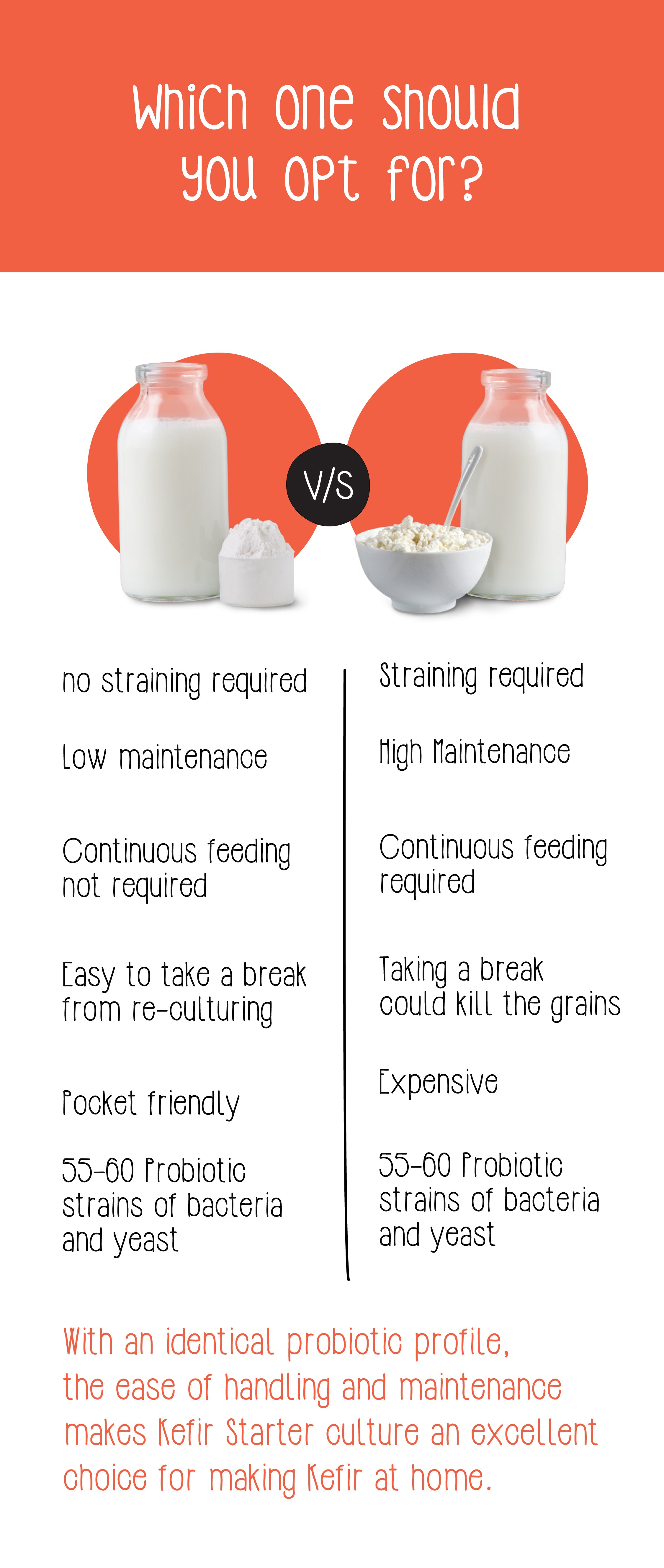
Milk kefir starter culture and traditional kefir grains are different fermentation formats. The starter culture is convenient for people who want simple, repeatable batches without maintaining grains continuously. Kefir grains are a living culture that can be maintained and reused with regular feeding and straining. Choose based on the maintenance style you prefer rather than assuming the two formats are microbiologically identical.

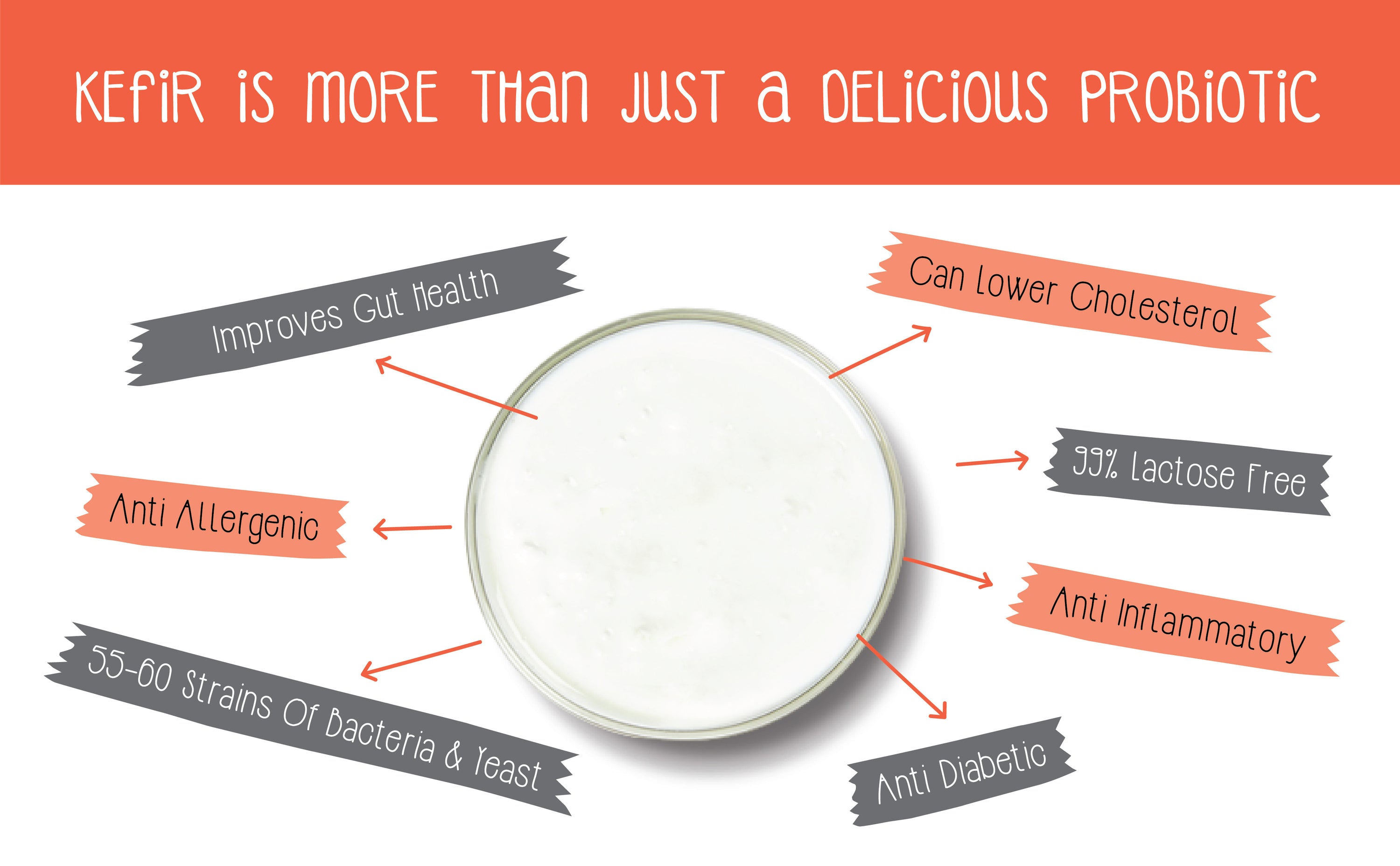
Fermentation can reduce the lactose content of milk, but the finished kefir should not be assumed to be lactose-free. Tolerance varies from person to person and also depends on the milk and fermentation process. If you have lactose maldigestion or intolerance, start cautiously and follow advice appropriate to your own health needs. Milk kefir made from dairy is not suitable for people with a milk-protein allergy.

Is Milk Kefir Safe for Pregnant Women and Kids?
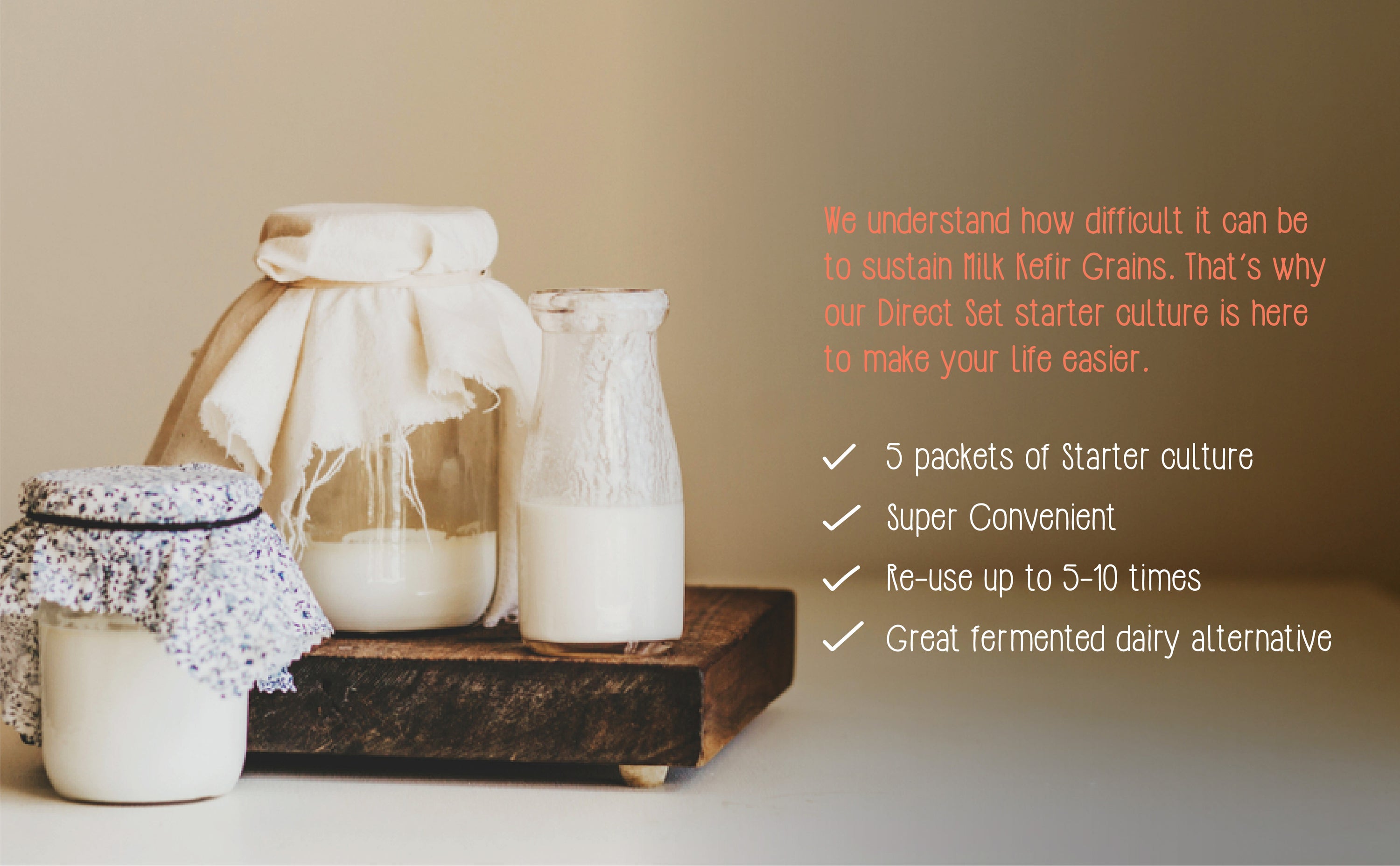
Whole dairy milk is the simplest place to start. Other dairy milks such as A2, toned, goat or buffalo milk can ferment differently because their fat, protein and processing vary. Plant-based milks do not behave like dairy milk and may require a different culture or method, so follow product-specific guidance rather than assuming the same process will work.

The sachet format is designed for convenient home fermentation. Follow the current pack instructions for any reculturing. How well a culture carries into later batches depends on milk, temperature, hygiene and batch history, so a fixed number of successful reuses should not be treated as guaranteed.

Separation into curds and whey and a more sour aroma can happen when milk kefir ferments further than intended. If the batch otherwise looks and smells normal, shorten the next fermentation or monitor it earlier. In cooler rooms fermentation can take longer, so keep the jar at a stable temperature within the range recommended in the instructions rather than simply adding more starter. Discard any batch with mould, unusual coloured growth or a putrid smell.

No. This product is intended for milk kefir. To make water kefir, use live water kefir grains or another culture specifically intended for sugar-water fermentation.