
Taste
Savoury, earthy and nutty, with a fermented depth. It is an acquired taste—and toppings make the introduction easier.
Cart
Your cart is empty
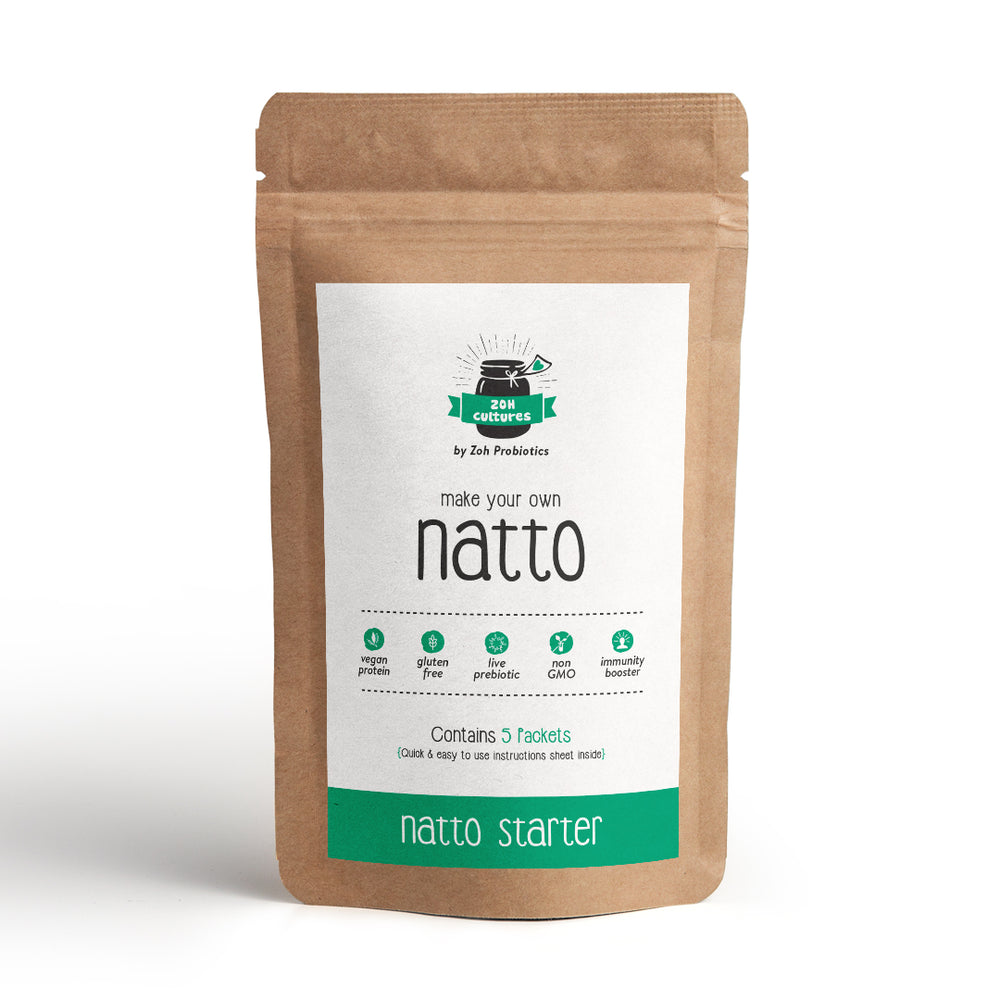
Your starter comes in five sachets. Add your own soybeans.
Make the wonderfully sticky Japanese soybean ferment at home, with guidance from your first soak to your first bowl.
JAPANESE FERMENTATION, IN YOUR KITCHEN
Make your own sticky, savoury natto. We’ll help you get started.
Starter culture for making natto • Not ready-to-eat natto
Five sachets per pack. Tax included.
Free shipping in IndiaOn all starter cultures
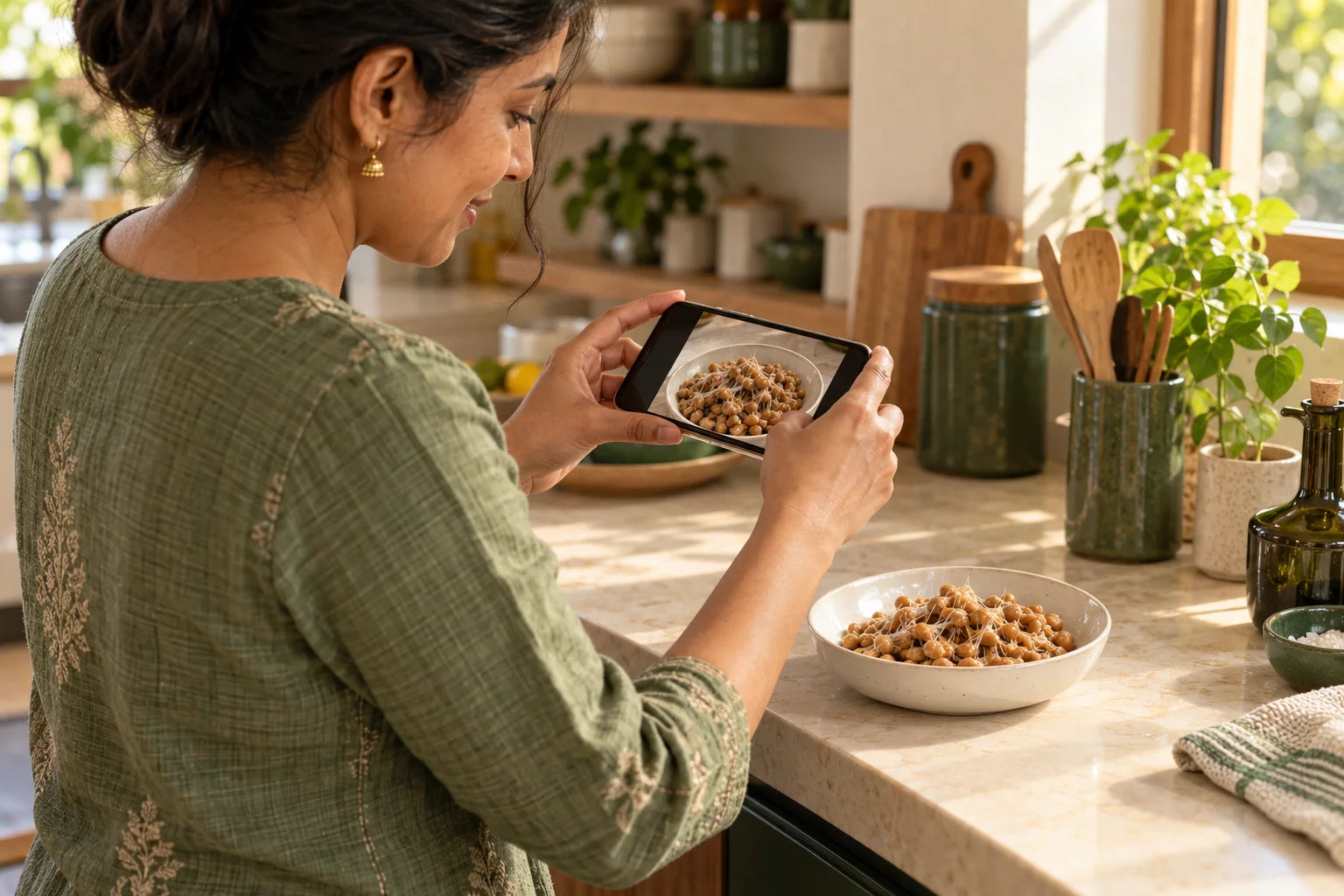
Help with your first batchSend us a photo
You’ll need soybeans, clean equipment, a thermometer and a way to hold a steady warm temperature.
MEET NATTO
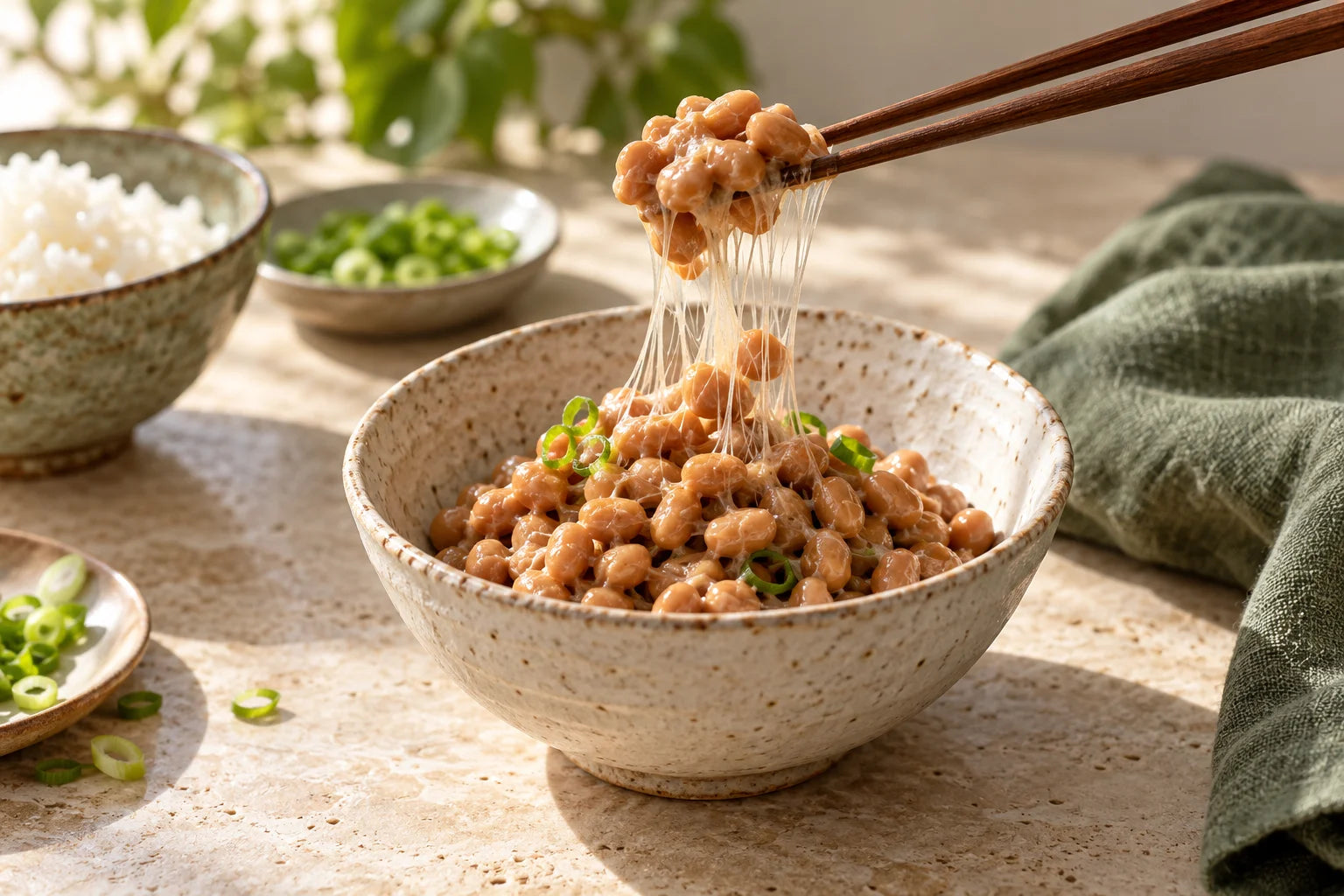
Natto (nattō, 納豆) is a Japanese food made from cooked soybeans fermented with Bacillus subtilis var. natto. It is known for its soft beans, savoury flavour and fine, sticky threads.
Think whole beans with a completely different personality. The culture changes their aroma and texture, creating a food traditionally served with rice, mustard and spring onion.
Savoury, earthy and nutty, with a fermented depth. It is an acquired taste—and toppings make the introduction easier.
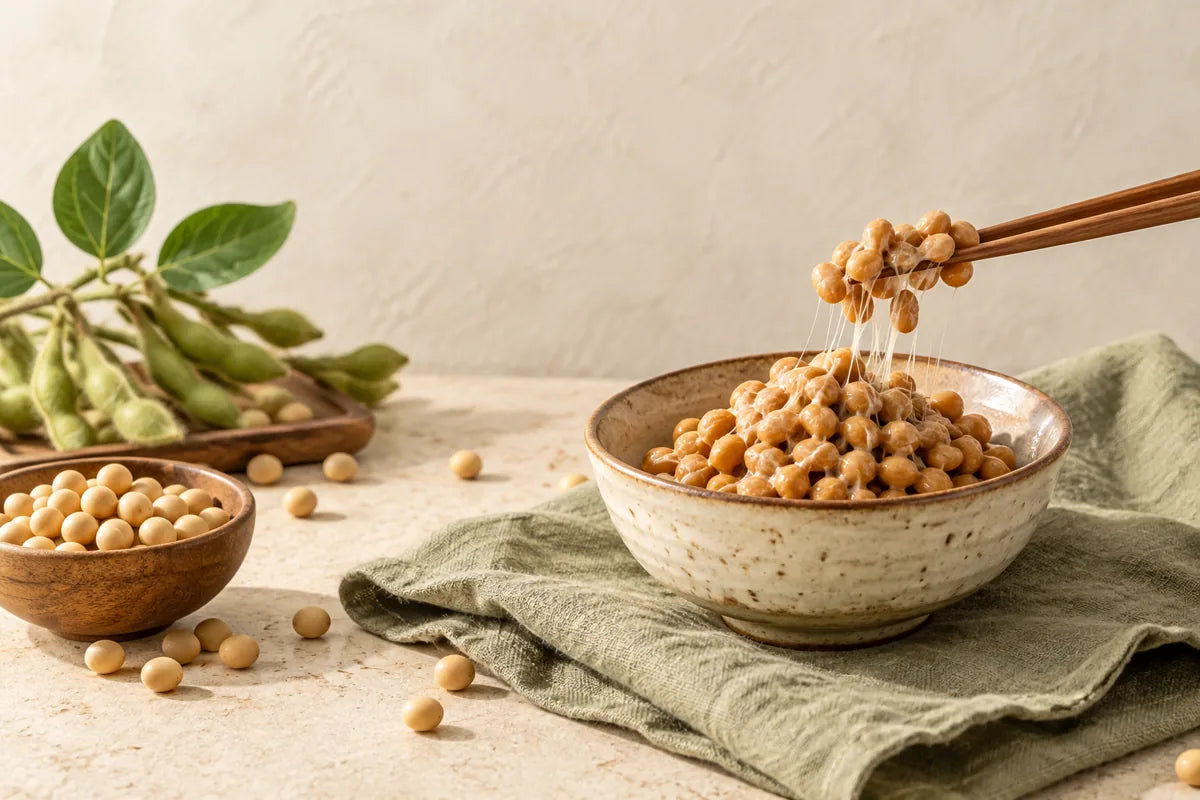
Soft whole beans in a sticky coating. Stirring lifts the characteristic fine threads.
Distinctive and pungent. Expect a fermented smell; don’t expect plain boiled soybeans.
YOUR FIRST BATCH
Soak and cook. Culture and ferment. Chill before your first bowl.
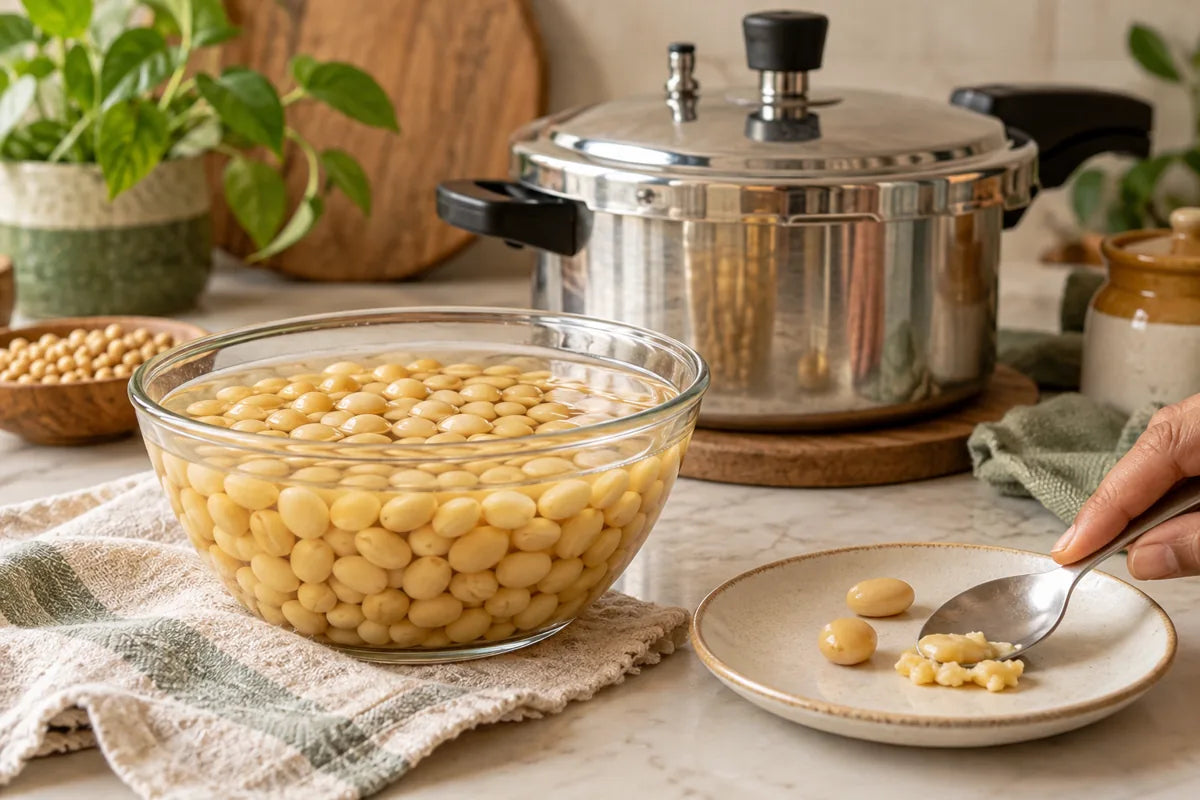
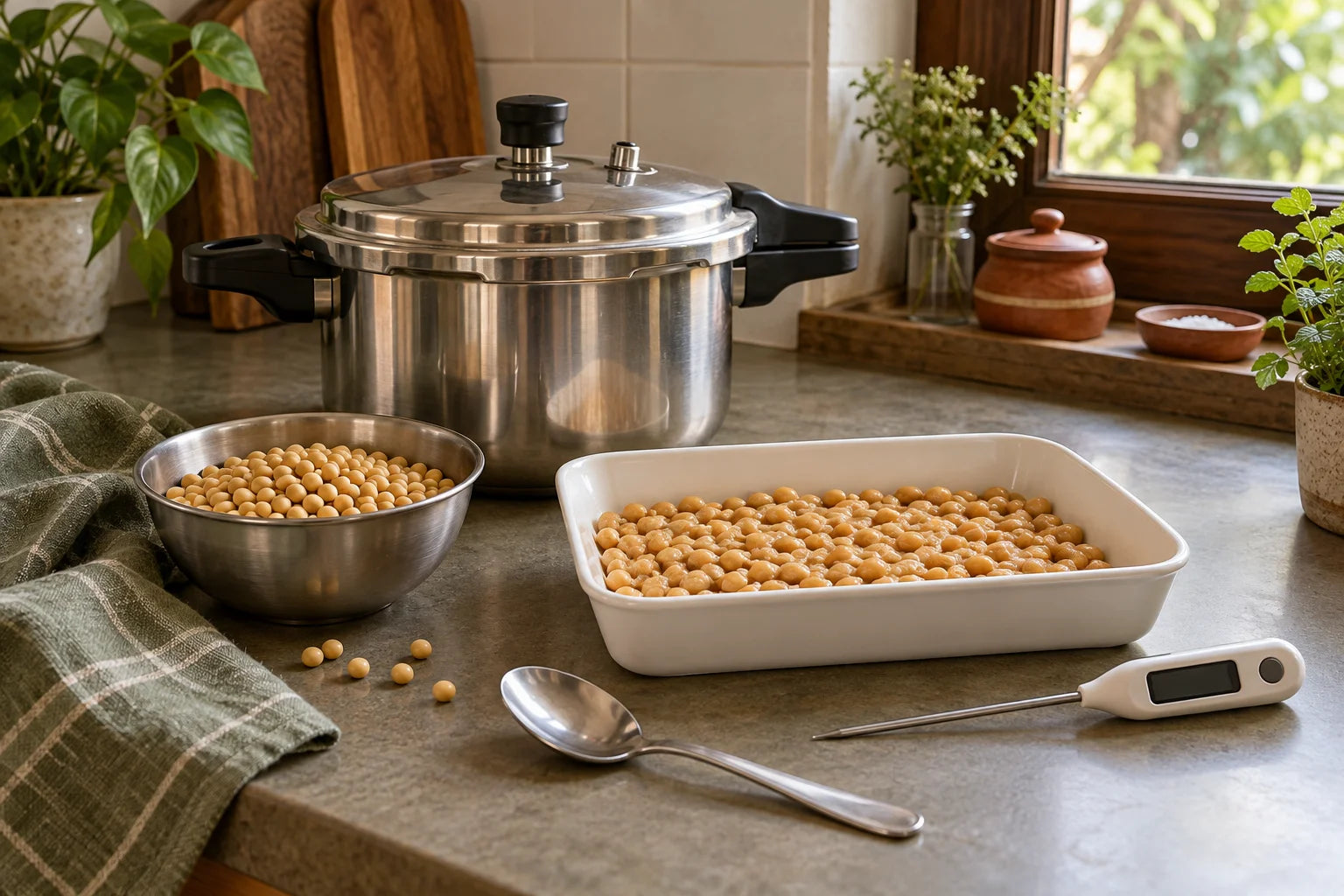
Soak whole soybeans, then cook until a bean squashes easily.
Tender all the way through
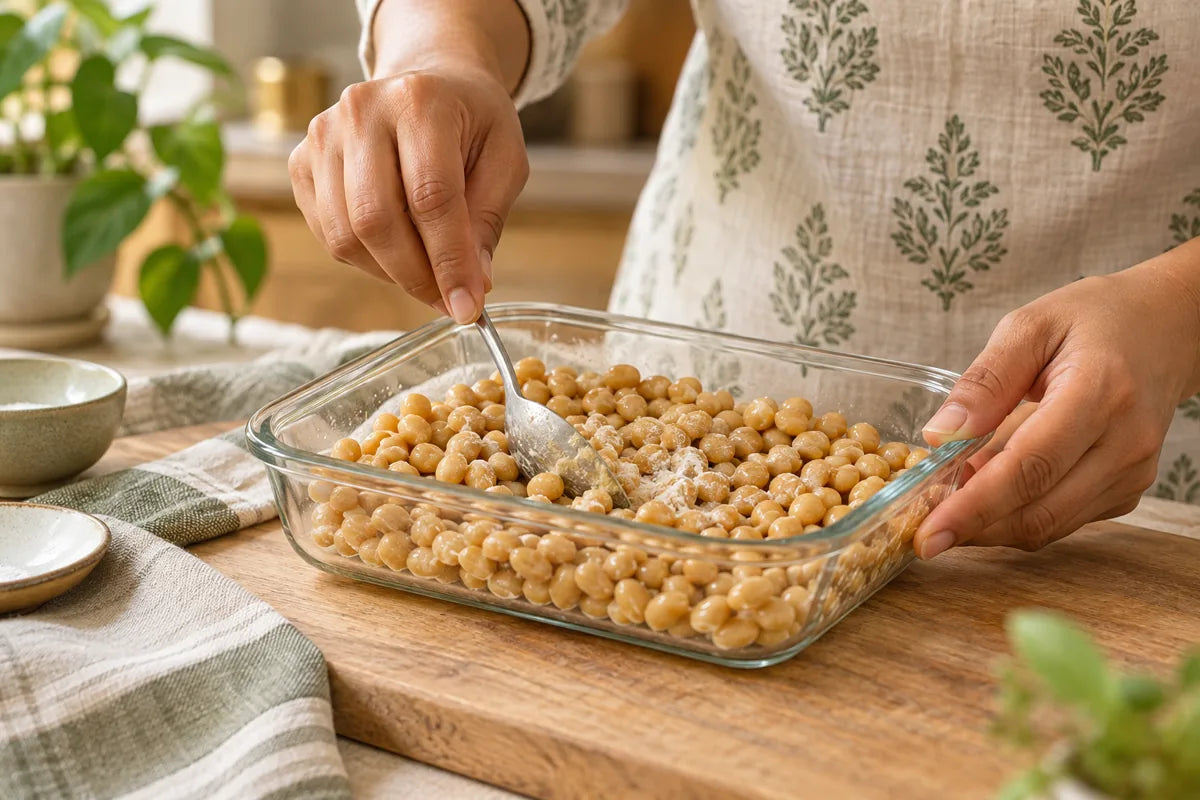
Use clean utensils. Follow your pack’s dose and mixing instructions.
Spread in a shallow dish

Ferment at 40–43°C for 22–24 hours with a suitable vented cover.
Check with a thermometer

Cool promptly, refrigerate overnight, then stir and season.
Your first bowl is ready
Illustrative preparation scenes. Follow your current pack instructions for dose and setup.
Test a bean from the centre of the batch with a clean spoon. It should squash easily, with no hard or chalky centre. Bean size, age and your cooker all affect cooking time, so use tenderness rather than a fixed number of whistles.
Rinse the dry beans and use plenty of potable water for soaking. In a hot kitchen, soak in the refrigerator and allow enough time for the beans to hydrate. Discard the soaking water and cook in fresh water. Wash hands and clean the work surface; heat-sanitise suitable utensils and containers before they touch cooked beans.
Natto is an aerobic fermentation: the culture needs oxygen. A deep, tightly sealed jar makes airflow and even temperature harder to manage. A shallow container with the vented covering specified in your preparation instructions is a better starting point. Keep insects and dust out.
BEFORE YOU START
Test your warming setup with a thermometer before you inoculate the beans. A button labelled “yogurt” doesn’t tell you the actual temperature.
Can work if its measured temperature matches the starter instructions and you can use a suitable vented container. Settings differ between models.
Useful for repeatable results. Measure where the beans sit, rather than relying only on the appliance display.
Only use a setup whose temperature you can verify and hold safely. An oven light may be too cool or too warm. Ordinary baking heat is unsuitable.
NATTO IN INDIA
The target is the temperature around your ferment—not the weather app. Check the actual conditions inside your chosen setup.
Warm weather does not guarantee a steady 40–43°C. Keep away from direct sun and check for overheating, especially inside an enclosed appliance.
A kitchen counter may stay too cool for reliable natto fermentation. Use a measured, controlled heat source instead of repeatedly extending the time.
Keep tools and covers clean and protect the food from insects. Watch condensation: water pooling over the beans is not the goal.
THE CULTURE AT WORK
Bacillus subtilis var. natto grows on the cooked beans in warm, oxygen-accessible conditions. This is a different fermentation from making yogurt, sourdough or tempeh.
Cooking softens and prepares the food for the culture. Fermentation does not replace cooking.
The culture changes bean components and develops natto’s characteristic flavour and aroma.
The sticky matrix includes poly-γ-glutamic acid. This is a characteristic of natto, rather than melted cheese or added gum.
Texture is a useful clue, not a food-safety test. Clean preparation and temperature control still matter.
WHY PEOPLE EAT NATTO
The benefits below refer to finished soybean natto, rather than starter powder.
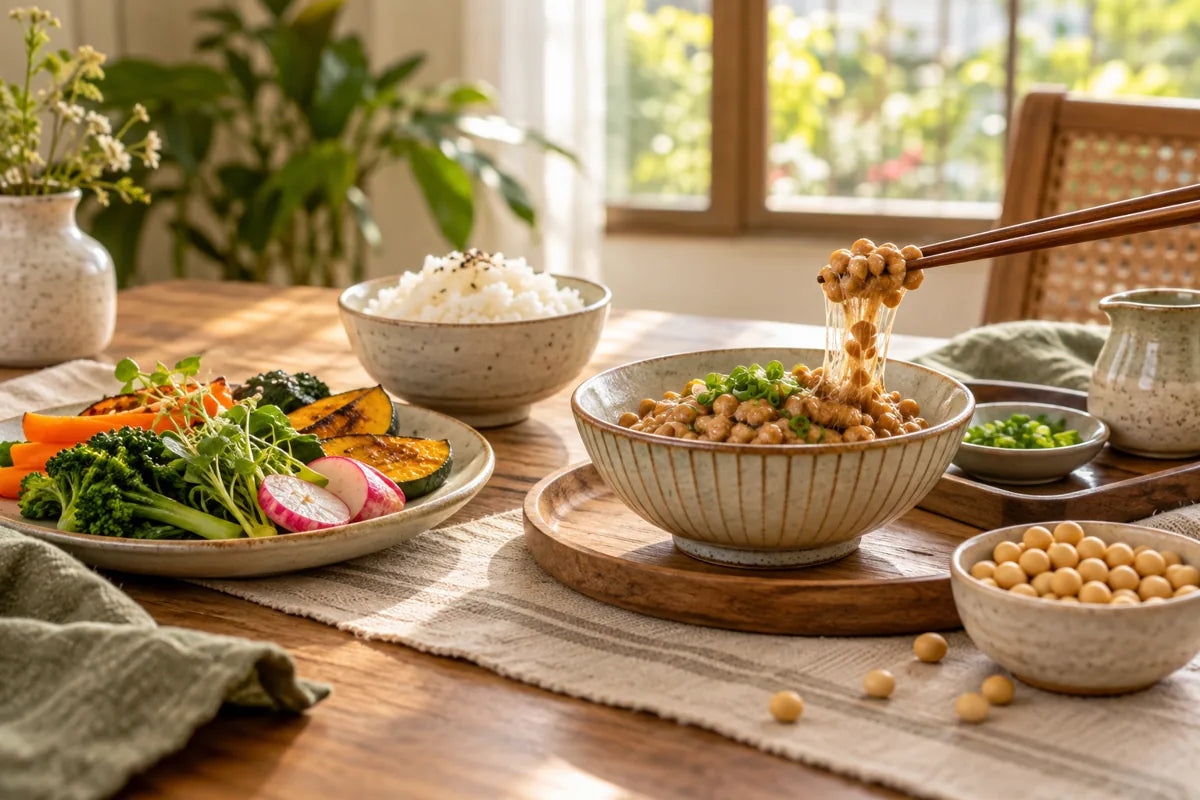
A soybean-based addition to rice bowls, toast and everyday meals.
Natto is a food source of K2, including MK-7. Homemade amounts vary.
Fresh, unheated natto contains fermentation microorganisms.
A new way to enjoy beans—with a texture and flavour all its own.
Home-fermented natto does not provide a guaranteed K2 dose or a standardised supplement dose. The presence of live microbes alone does not establish a particular probiotic benefit.
Natto is the food. Natto starter is the culture used to make it. Nattokinase is an enzyme associated with the fermentation and is also sold in supplement form. Neither a starter sachet nor a bowl of homemade natto provides a standardised supplement dose.
A large Japanese observational study found an association between higher fermented-soy intake and lower mortality. It cannot prove that natto caused the difference, and it was not a trial of this starter. We do not present natto as a treatment for heart disease or any other condition.
Taking warfarin or another vitamin K antagonist? Ask your prescriber before adding natto. Soybean natto is not suitable for someone with a soy allergy.
MAKE IT YOUR KIND OF FOOD
Start with a little finished natto. Pair it with something you already love.
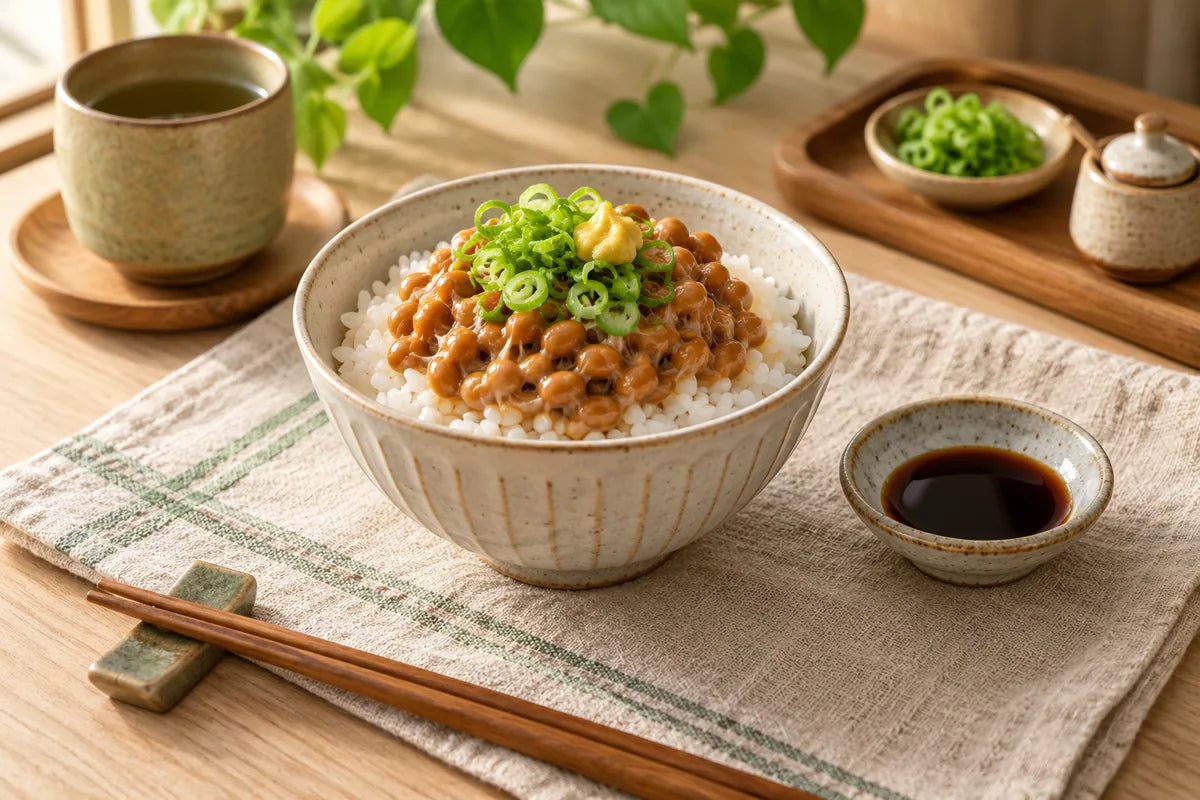
5 MINUTES · 1 SERVING
Warm rice, spring onion and a little mustard. A familiar place to start.
View recipe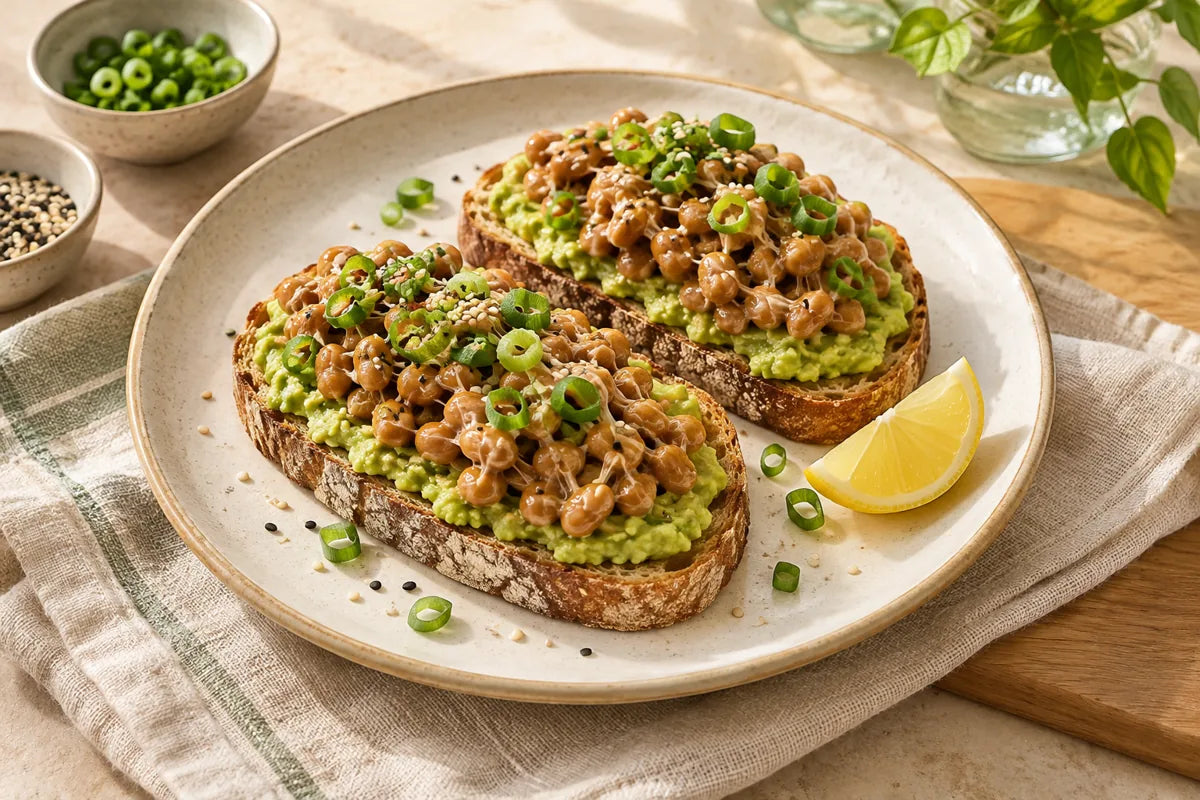
5 MINUTES · 1 SERVING
Creamy avocado, crisp toast and a savoury natto topping.
View recipe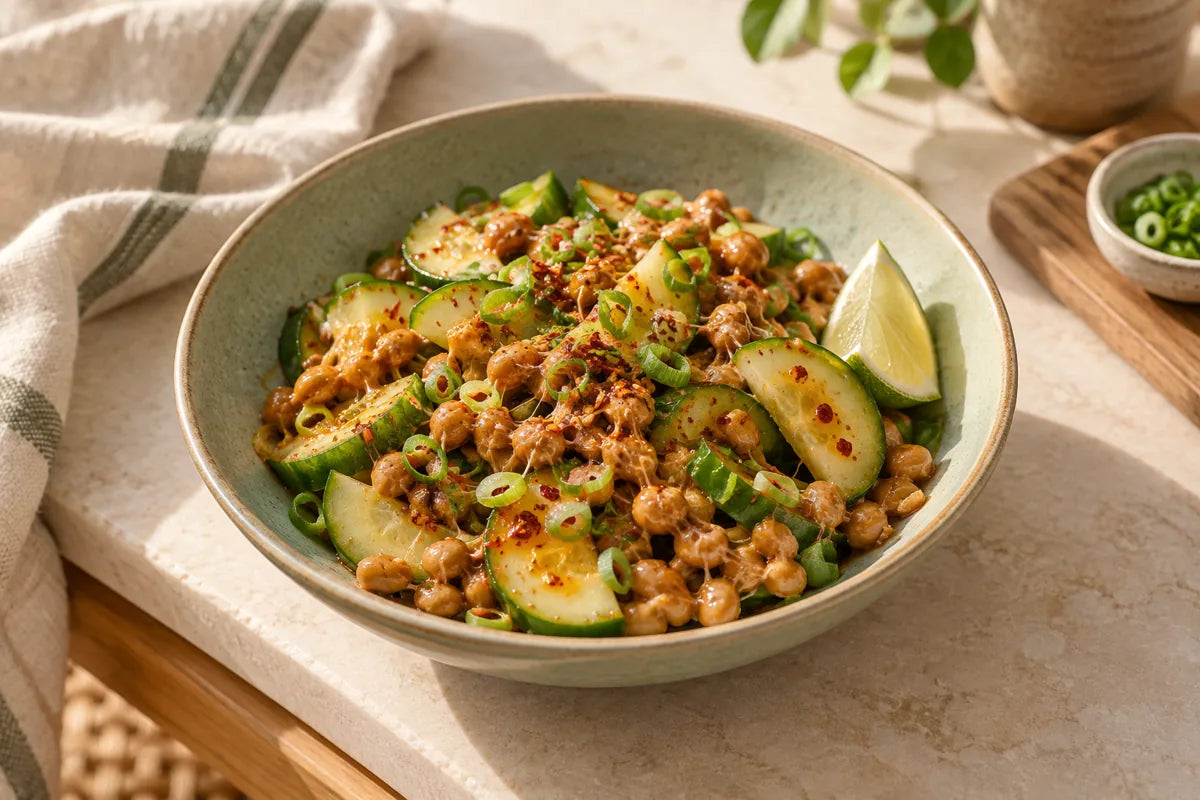
5 MINUTES · 1 SERVING
Cool cucumber, sticky natto and a bright chilli-lime finish.
View recipeServing inspiration using finished natto. Soybeans, sauces and toppings are not included.
SAME SOYBEAN. DIFFERENT PERSONALITIES.
Compare the texture, flavour and kitchen role—not just the names.
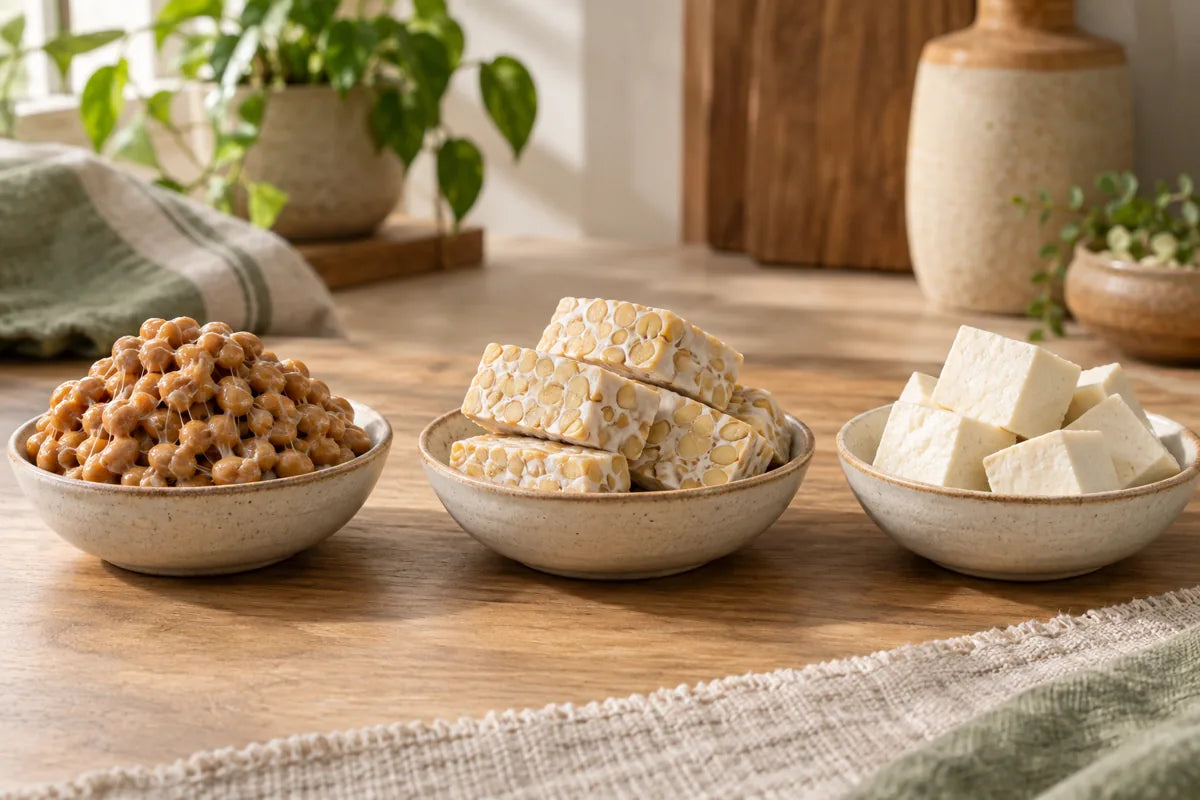
Swipe the table to compare on a smaller screen.
| At a glance | Natto | Tempeh | Tofu |
|---|---|---|---|
| Made from | Whole cooked soybeans | Whole cooked beans | Soy milk |
| Fermented? | Yes | Yes | Ordinary tofu: no |
| Culture / method | Bacillus subtilis var. natto | Rhizopus culture | Soy milk set into curds |
| Texture | Soft, sticky, thread-forming | Firm, sliceable bean cake | Soft to firm; smooth |
| Flavour | Savoury, earthy, pungent | Nutty, earthy | Mild; takes on sauces |
| How to enjoy | Chilled; stirred into toppings or sides | Cook in stir-fries, tikkas or sandwiches | Cook, marinate or blend as suitable |
| A good fit when… | You want a distinctive fermented topping | You want a firm ferment to cook | You want a mild, versatile base |
IS THIS NORMAL?
Sticky is expected. Guesswork is optional. Use these checks to understand what happened and improve your next batch.
Judge the result alongside your recorded preparation and temperature—not from one photo or the clock alone.
Ask us about your batch ↓Check the measured fermentation temperature, bean tenderness, starter dose, how evenly it was mixed and whether the cover allowed airflow. An underheated or poorly inoculated batch may not develop normally. Do not keep warm indefinitely or assume reheating will make an uncertain batch safe.
Fermentation does not reliably soften undercooked beans. For your next batch, cook until the centre of a bean squashes easily with a clean spoon. Don’t rely on fermentation to finish the cooking.
Review how well you drained the cooked beans and whether condensation is dripping from the lid. You want moist beans with airflow, not beans submerged in water. Adjust the setup for the next batch rather than stirring pooled liquid repeatedly into the ferment.
A thin pale coating and a pungent aroma can occur in natto. Neither proves that a batch is safe. Fuzzy growth, unusual pink, green or black patches, or a rotten odour are reasons to discard it. If you are uncertain, do not taste-test it; send us a photo and your process details.
Record how long it was out of range and contact us with the batch details. There is no universal safe “extra time” to add after a disrupted process. Do not serve an uncertain batch.
No. Discard the whole batch; do not scrape the surface, wash the beans or cook it as a rescue. Clean and sanitise suitable equipment before starting again.
KEEP THE TWO SEPARATE
Follow the storage instructions and best-before date on your current pack. Keep sealed, dry and protected from heat and direct sunlight. Check the pack before deciding whether refrigeration is needed.
After fermentation, cool promptly and refrigerate in clean, covered portions. Use clean utensils each time. Freeze portions you will not eat soon and thaw in the refrigerator. Follow your preparation guide for storage duration.
A home ferment’s shelf life depends on preparation, handling and fridge temperature. We do not use a commercial pack’s expiry date as a guarantee for your batch.
WE’RE HERE FOR YOUR FIRST BATCH
Tell us what you did, show us what you’re seeing, and we’ll help you work through it. You don’t need to know the technical terms.
We’ll troubleshoot with you and replace the culture free if we identify a product fault.
Replacement policyFROM THE ZOH JOURNAL
A little guidance for every stage—from curious to confidently culturing.
THE NATTO EDIT
The food, its flavour and those famous sticky threads.
Read the article ↗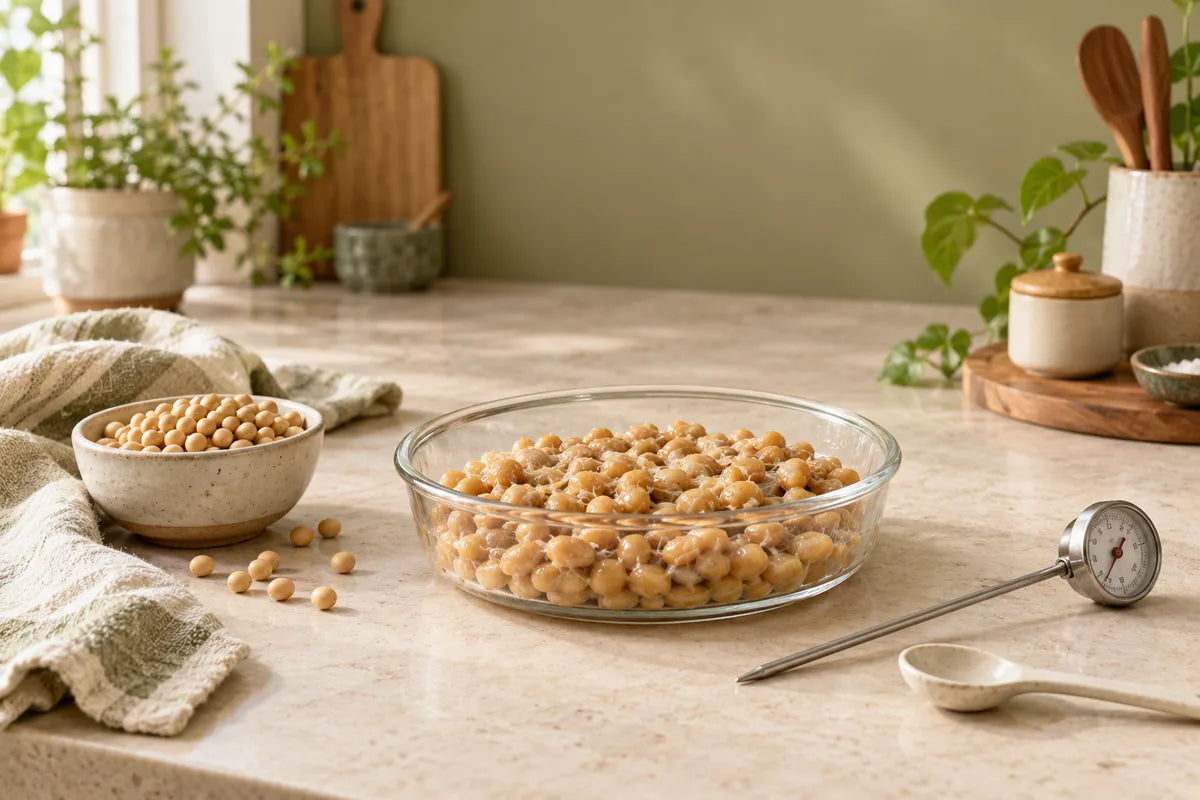
THE FIRST-BATCH GUIDE
Preparation, equipment and the fermentation routine.
Read the article ↗
A LITTLE HELP
Texture, temperature and what to check next.
Read the article ↗YOUR NATTO QUESTIONS, ANSWERED
Buying, making, tasting and storing—find the part you need.
You can order Zoh Natto Starter Culture on this page. It is a culture for making natto at home. Free shipping applies to starter cultures delivered within India; availability and any international delivery charges are shown at checkout.
No. You receive five starter sachets, not a tub of finished natto. You add the culture to properly cooked soybeans, ferment with controlled warmth and airflow, then chill the finished food.
Five sachets of natto starter culture. Soybeans, serving sauces and fermentation equipment are not included. Use the preparation and storage guidance supplied with your current pack.
Both terms are used for cultures intended to start natto fermentation. Concentration and carrier ingredients differ between products. Follow this starter’s dosing instructions rather than copying a pinch measurement from a different brand.
No, but you do need to follow the preparation process and measure temperature. Read the equipment checklist first and test your warming setup before starting with the culture.
Enter your delivery address at checkout to check whether this product can be shipped to your country and see the applicable charges. India’s free-culture-shipping offer does not apply internationally.
Start with whole food-grade soybeans. Smaller beans are commonly used for natto, but thorough hydration and cooking matter more than chasing a particular imported variety. Soya chunks and textured soy protein are different ingredients and are not the baseline recipe here.
Yes, for cooking the soaked soybeans. Check tenderness rather than using a universal whistle count. Pressure cooking is the preparation stage; fermentation needs a separate controlled warm setting with suitable airflow.
Potentially, if the actual temperature at the beans is appropriate and the container allows airflow. Check your model’s instructions and measure the temperature. Do not assume every yogurt mode runs at the same temperature.
Room temperature is not a reliable substitute for controlled fermentation. The current Zoh guide uses approximately 40–43°C. Even a hot day may not keep the beans in that range overnight, while direct sun can overheat them.
Allow time to soak and cook the beans, around 22–24 hours for fermentation under the recommended conditions, and an overnight chill. “24-hour fermentation” does not mean ready to eat 24 hours after opening the pack.
The fermentation organism grows with oxygen. Use a shallow layer and the appropriate vented covering in your instructions. A sealed jar or deep mass of beans can make airflow and temperature uneven.
For a first batch, use a defined food-grade natto starter. Do not rely on random microorganisms from straw, leaves or the kitchen to produce a predictable food fermentation.
Some makers use finished natto to inoculate another batch, but repeated transfers can change performance and increase contamination risk. Fresh starter and the supplied process are the more predictable baseline for beginners.
Other legumes can be fermented, but they differ in cooking needs and results. Start with the soybean method supplied with this culture. A chickpea batch is not automatically soy-allergen-free: the starter and handling must also be suitable.
Its culture produces a sticky matrix, including poly-γ-glutamic acid. The fine threads become noticeable when the beans are stirred. Stringiness is characteristic, but it is not by itself proof of food safety.
It is savoury, earthy and nutty with a strong fermented aroma. It is not sweet or like plain boiled beans. Try a small amount with rice, spring onion and a little mustard or soy sauce.
Yes, if you enjoy the characteristic threads. Stir the finished chilled natto with clean utensils, then add your preferred seasonings. There is no special number of stirs you need to hit.
Yes. Properly prepared, chilled natto can be served cold or at serving temperature with a meal. “Unheated” natto still starts with thoroughly cooked soybeans; it is not raw soybean food.
You can use finished natto in cooked dishes, but heating changes the texture and can reduce live microorganisms and enzyme activity. For an unheated serving, add natto after cooking the other ingredients.
Start with a small amount, such as a spoonful alongside a meal, and see how you enjoy and tolerate it. There is no universal therapeutic daily dose. The portions in our serving ideas are culinary suggestions.
Portion a successfully prepared batch into clean freezer-safe containers and freeze what you will not eat soon. Thaw in the refrigerator. Freezing preserves food for later use; it does not rescue a spoiled or uncertain batch.
Plain soybean natto is a plant-based food. Check any added sauce: some Japanese seasoning sachets contain fish stock. Check the starter’s current ingredient and allergen information as well.
Soybeans are naturally gluten-free, but the starter’s carrier ingredients, cross-contact and serving sauces still matter. Ordinary soy sauce often contains wheat. If you have coeliac disease, use products with appropriate verified gluten-free information.
Natto is known for vitamin K2, including MK-7. The amount depends on fermentation conditions and the culture. We do not promise a measured K2 amount from a homemade batch.
No. Natto is a fermented food; nattokinase is an enzyme associated with it and sold separately in supplements. A natto starter is for food fermentation and is not a nattokinase supplement.
Fresh natto contains live fermentation microorganisms. A demonstrated probiotic benefit depends on the particular strain, dose and evidence. We do not claim that every home batch delivers a clinically proven probiotic effect.
Avoid soybean natto if you have a soy allergy. Fermentation does not reliably remove soy allergens. Changing the beans also does not establish that the starter or preparation is free from soy cross-contact.
Natto is rich in vitamin K and can interfere with vitamin K antagonist treatment. Speak with your prescriber before adding it to your diet. Do not change medication or use natto as a substitute for treatment.
Ask your clinician about home-fermented foods in your circumstances. Preparation, handling and storage matter, and a starter culture does not make every home batch safe for every person.
FROM ZOH CUSTOMERS
YOUR NEXT KITCHEN EXPERIMENT
Five sachets. A new food to make your own. Help when you need it.