
55–60 culture strains
Zoh’s starter contains 55–60 strains of naturally occurring bacteria and yeasts for making fresh kefir at home.
Cart
Your cart is empty
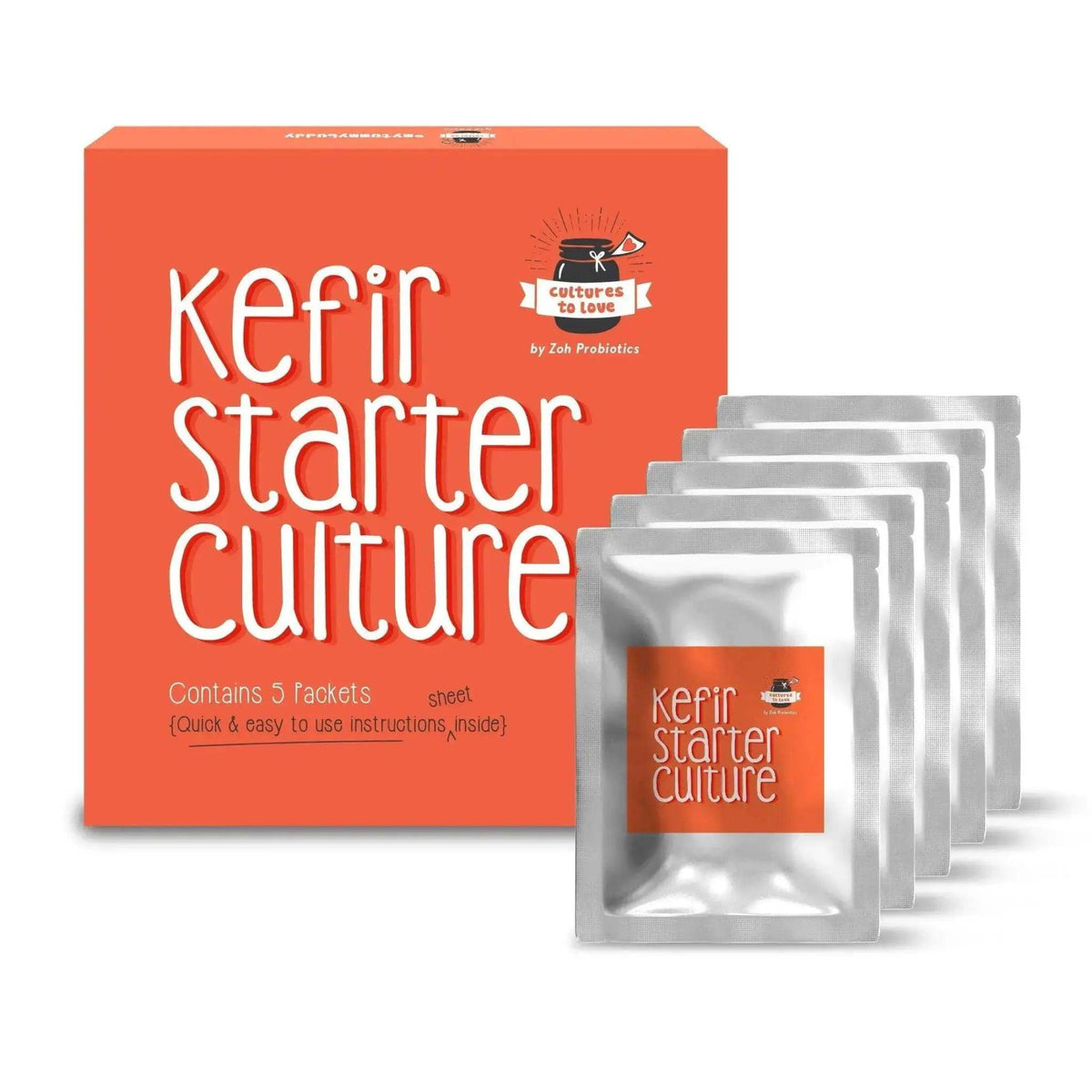
Start with one sachet in 1 litre of milk. Re-culture 5–10 times using 3 tablespoons of plain finished kefir per litre of fresh milk. Larger repeat batches make the up-to-100-litre total possible across all five sachets: use 6 tablespoons for a 2-litre batch.
Make more kefirHomemade kefir starts here
55–60 strains of live cultures in your morning smoothie or masala chaas.
Just stir into milk. No grains to feed or strain.
Need a hand with your kefir? Our team will guide you through your first batch. Support & replacement policy
Your first batch
Start with full-fat, pasteurised, homogenised milk. A clean glass jar, spoon, cloth and a little patience are all you need; a thermometer helps.
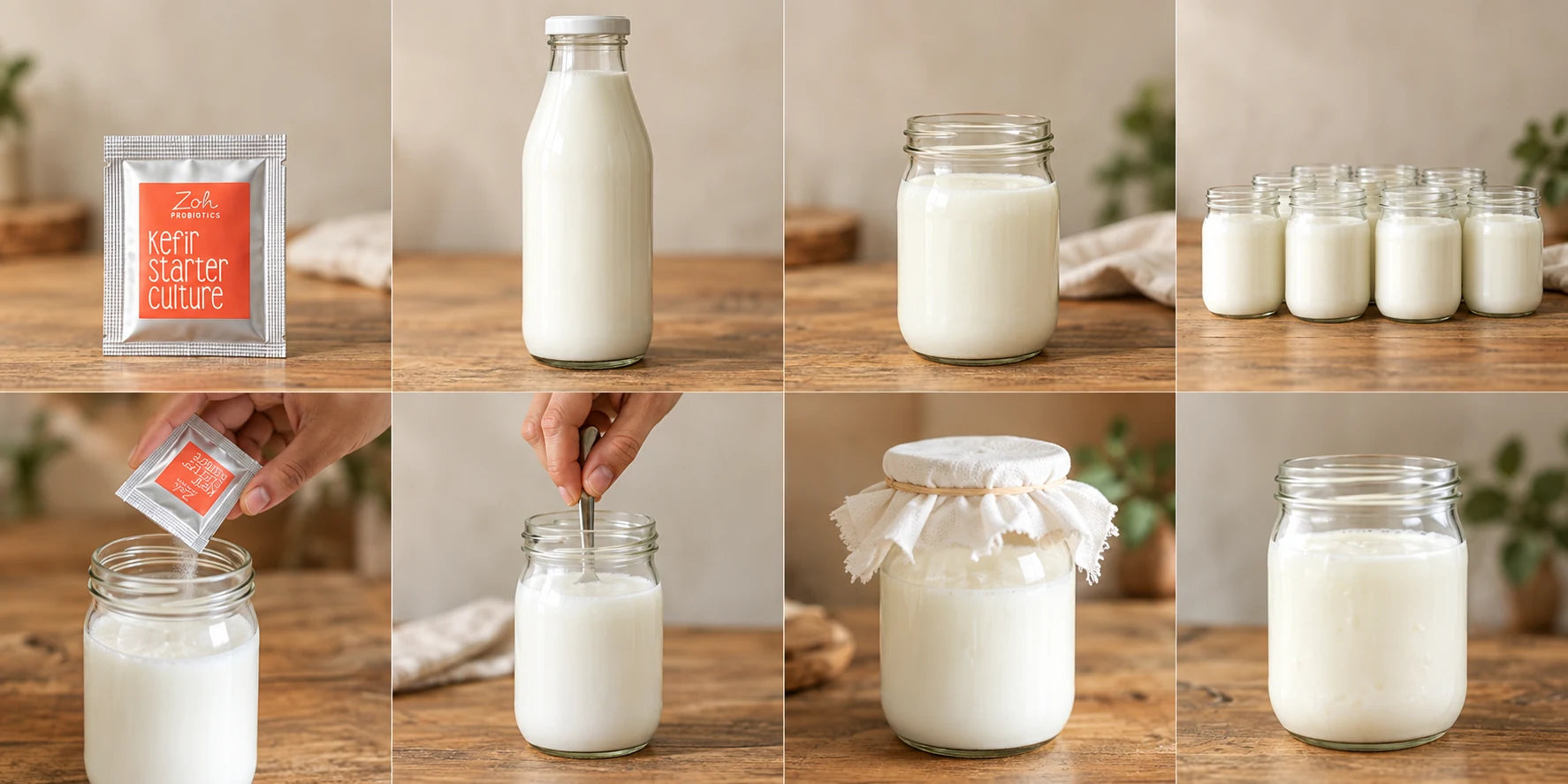
Add one sachet to one litre of room-temperature milk in a clean glass jar.
Stir well for about two minutes. Cover with a clean, tightly woven cloth.
Allow 12–24 hours, depending on temperature, batch size and milk type. Keep out of direct sun, ideally at 21–28°C, and check earlier in warm weather.
Cover with a lid and refrigerate once ready. Add fruit or spices before serving.
Save some finished kefir to start your next batch. Make more by increasing the milk and kefir together.
One sachet + 1 litre of milk. Follow the four steps above.
Save 3 tablespoons of plain kefir per litre of fresh milk, before adding flavours.
2 litres of fresh milk? Use 6 tablespoons of kefir. Scale up at the same ratio.
Save kefir from each successful batch. After 5–10 repeats, open a fresh sachet.
An example using larger batches at the upper end of the re-culturing range; the first batches are extra. Total yield varies with milk, temperature and handling.
Probiotics through real food
Bring live cultures to the foods you already love. A spoonful in raita, a glass of chaas or a fruit-filled smoothie is a delicious place to start.
Zoh’s starter contains 55–60 strains of naturally occurring bacteria and yeasts for making fresh kefir at home.
A small human study found better lactose digestion with kefir than milk. Homemade kefir is not automatically lactose-free.
See the research →A human study linked a varied fermented-food diet with greater gut microbial diversity. Kefir was one of the foods included.
What the study found →Dairy kefir contributes protein and calcium from the milk you use. Add fruit, herbs or spices to make it your own.
From Zoh customers’ kitchens

 Try it in masala chaas, too
Serving ideas
Think of a drinkable cousin of dahi: tangy, sometimes mildly yeasty, and lovely chilled.
Start with something you already enjoy. Blend with mango for lassi, whisk with roasted jeera for chaas, or stir into cucumber raita.
Check the temperature near your jar; warm kitchens ferment faster.
Keep the jar away from sunshine, the stove and other hot appliances. Check your batch earlier and refrigerate it when ready.
Choose a spot away from cold draughts. Stay within the temperature range in your instructions; avoid direct heat or an unmonitored warm oven.
Keep equipment clean and dry before use. Secure the cloth cover to keep insects out. Follow the temperature near the jar, rather than assuming rainy weather needs a fixed extra number of hours.
Looking for milk kefir grains?
This product is a starter culture, not grains. Both can make milk kefir; the practical difference is how you start, reuse and look after them.
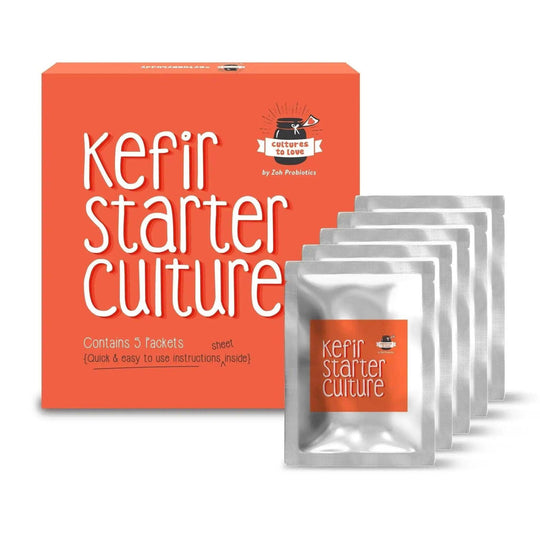
Powdered culture in sachets
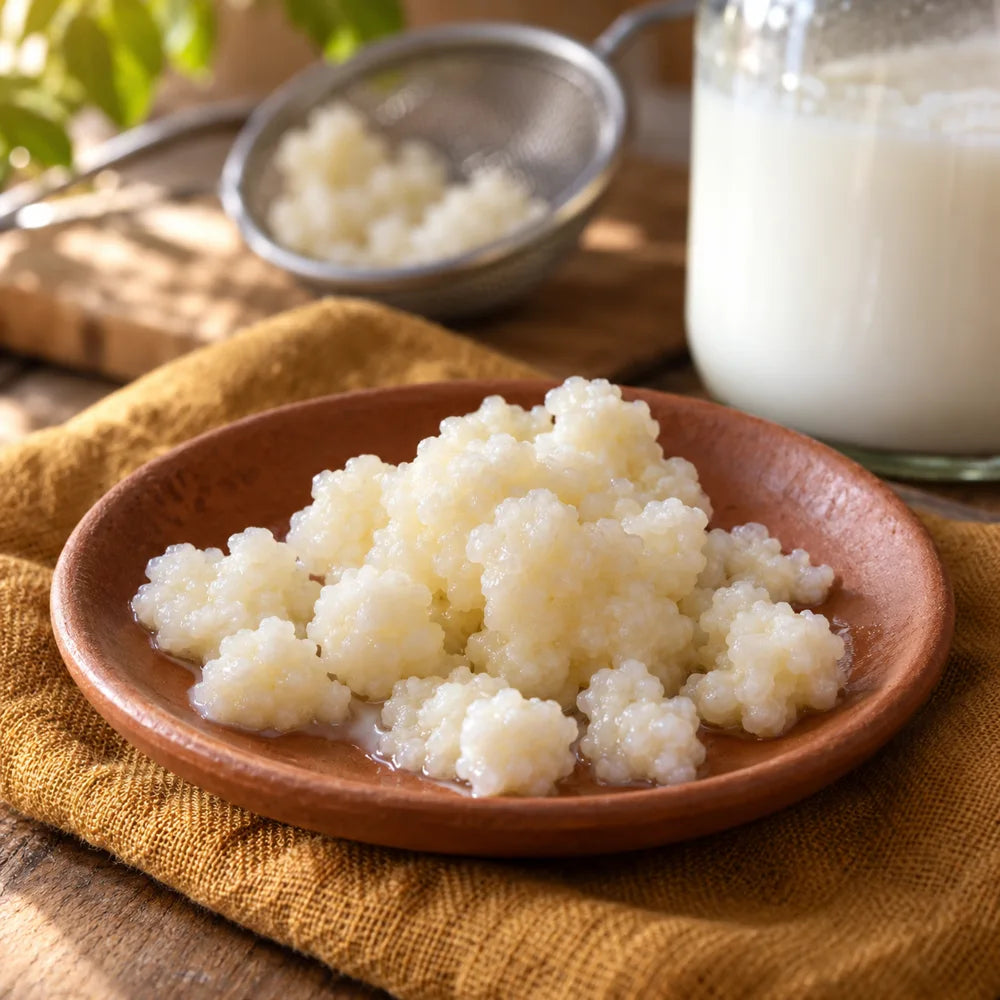
Reusable clusters of bacteria and yeasts
Illustrative image · grains not included| What matters to you | Zoh starter culture | Milk kefir grains |
|---|---|---|
| Getting started | Open a sachet and mix with suitable milk. | Use active grains, or activate dried grains as directed. |
| Between batches | No grains to feed or strain. Store unopened sachets in the freezer. | Strain and feed active grains regularly; plan storage for breaks. |
| Reusing your culture | Re-culture 5–10 times with finished kefir, then start with a fresh sachet. | Can be reused long-term with proper care and can multiply. |
| Bacteria & yeasts | 55–60 strains of naturally occurring bacteria and yeasts. | Composition varies by grain source and cultivation. The two formats are not automatically identical. |
| Ongoing cost | Milk plus periodic starter replenishment. Successful reculturing stretches each sachet. | Milk for ongoing feeding; healthy grains can reduce repeat culture purchases. |
| A good fit if… | You want convenient batches without caring for grains. | You enjoy maintaining a living culture for frequent brewing. |
Choose starter culture if you prefer making batches without maintaining grains.
Choose your starter packs Milk choice changes the texture
Milk affects thickness and texture. Start with full-fat, pasteurised, homogenised milk, then try other options with the right instructions.
Our recommended first batch. Usually gives a richer, fuller texture.
May make thinner kefir. Thickness alone does not tell you whether fermentation worked.
Results can vary with fat, protein and processing. Check the milk guide before changing your method.
Needs its own method. It will not set like dairy milk; ask us for guidance before starting.
Kefir does not always set like dahi. It can be pourable, slightly lumpy or separated into curds and whey.
Swipe to compare textures →
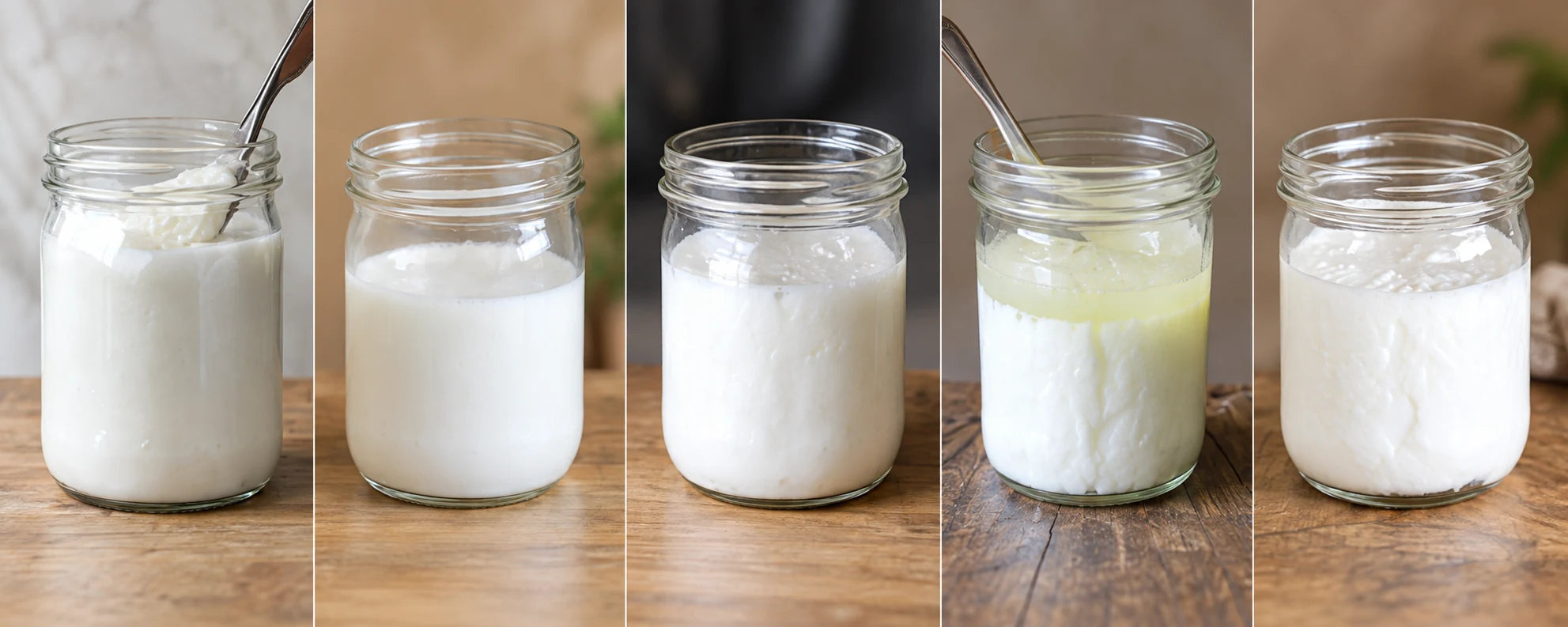
Milk starts to thicken. Small lumps can appear as it ferments.
Kefir can stay drinkable. It does not need to set like dahi.
More time can mean a thicker texture and a sharper taste.
Pale yellow whey separates from white curds. Check the batch earlier next time.
The milk you choose affects thickness. Every batch can look a little different.
Texture changes with milk and temperature. Appearance alone cannot confirm that a batch is safe.
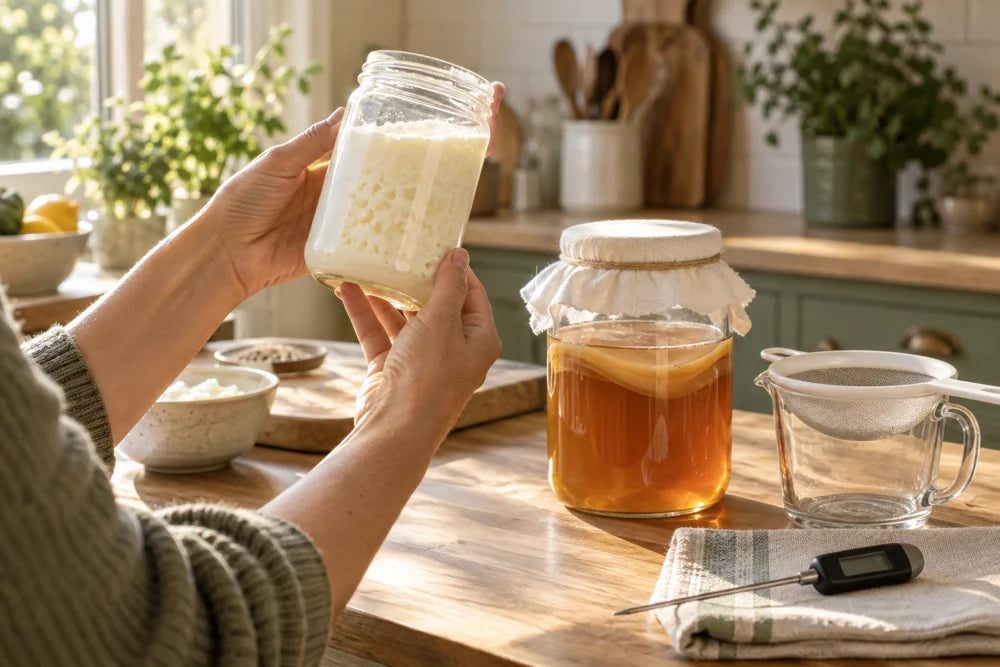
Too sour, bitter or not setting? Tell us your milk, room temperature and fermentation time. A photo helps, too.
Find help with your batchAsk the Zoh team →Use a clean glass jar, spoon and tightly woven cloth. A thermometer helps; a special kefir machine is not needed. Allow about 12–24 hours at the recommended temperature. Warmer kitchens ferment faster, while cooler ones can take longer.
Fermenting in your climate →Keep unused sachets sealed in the freezer and follow the printed best-before date. Refrigerate finished kefir in a clean, covered container; Zoh’s instruction sheet gives up to one week.
Re-culture 5–10 times from each sachet using 3 tablespoons of plain finished kefir per litre of fresh milk. Scale this ratio for larger batches. Keep a fresh sachet for restarting.
Fermentation reduces lactose, but homemade kefir is not automatically lactose-free. Individual tolerance varies. Kefir made with dairy milk is not suitable for a milk-protein allergy.
This starter makes milk kefir. For a fermented sugar-water drink, choose water kefir grains, which are a different culture.
Free shipping on cultures in India. Order processing takes 1–2 business days; domestic delivery is typically 3–7 business days after dispatch, depending on your pin code. See our shipping policy for dispatch and delivery guidance.
International delivery typically takes 5–12 business days after dispatch, depending on destination and customs. Availability and shipping charges depend on your country; import duties and taxes are paid by the recipient. Email us your country and postcode to confirm delivery and payment options. If an international card fails, contact us before trying again.
Check international delivery →Made with your homemade kefir
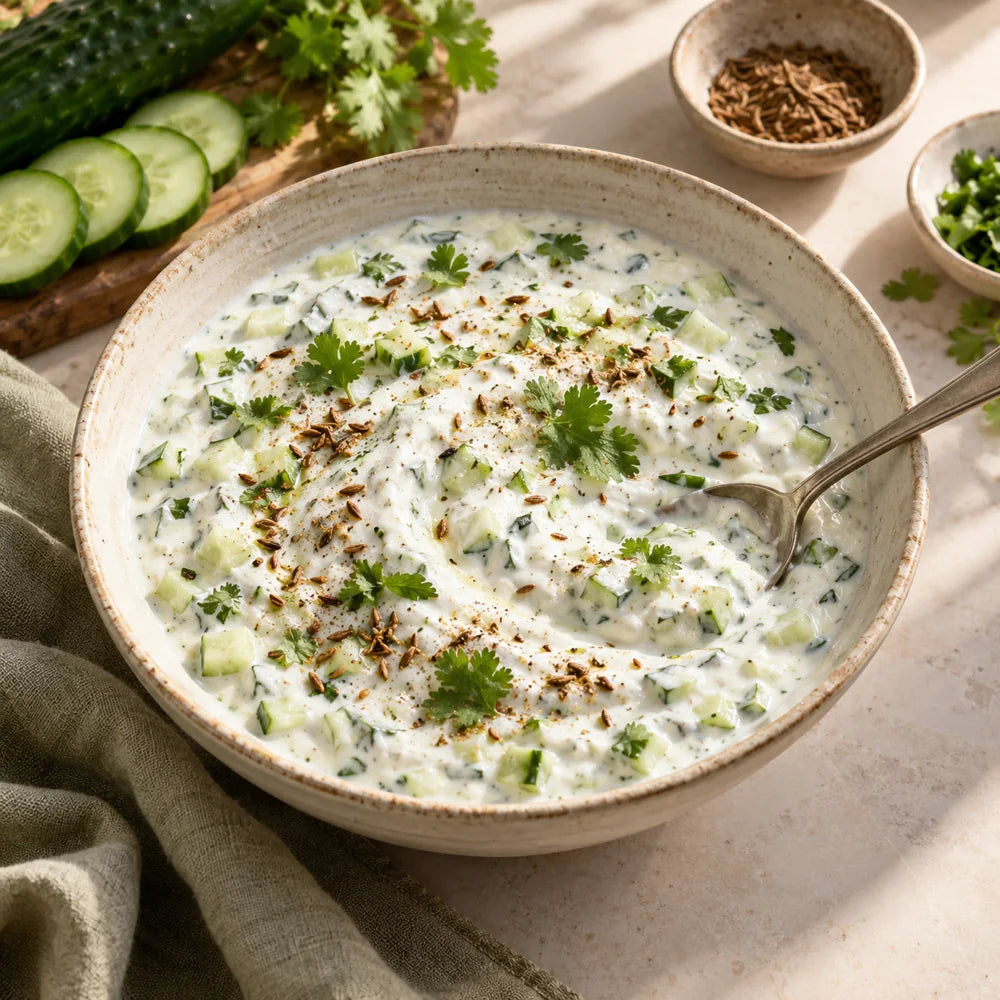
A cooling bowl for pulao, parathas and everything in between.
Make kefir raita →Ripe mango, chilled kefir and a little cardamom.
Make mango lassi →Whisk chilled kefir with water, roasted jeera, salt and fresh coriander. Add these after fermentation.
For the curious
A closer look at the science, with links to read for yourself.
 Explore Zoh’s science resources →
Researchers found better lactose digestion and tolerance with kefir than milk in adults with lactose maldigestion. Results do not mean every kefir is lactose-free.
Read the study →In a Stanford study, a diet including several fermented foods increased gut microbial diversity and reduced measured inflammatory proteins. It studied the overall diet, not kefir alone.
Read the research →
Meet the bacteria and yeasts behind milk kefir.
Read the article →A species is a group of related microbes; a strain is a particular member. This article describes microbes reported in kefir, not a batch-specific laboratory report for Zoh’s starter.

Compare the flavours, cultures and ways to enjoy them.
Read the article →
Learn how grains work and what caring for them involves.
Read the guide →A useful pairing if you want to make both at home. Each culture follows its own method.
 Milk Kefir Starter1 pack · Rs. 555
 Greek Yogurt Starter1 pack · Rs. 550
Tap a topic to find your answer.
Zoh comes as a powdered starter in sachets. Grains are reusable clusters that you strain out and feed with fresh milk. Starter suits occasional batches and simpler upkeep; grains suit people who enjoy maintaining a culture. Both have practical trade-offs.
Compare starter and grainsNo. This product makes milk kefir without growing grains. You can use some plain finished kefir for another batch according to the supplied instructions, but that is different from growing and maintaining grains.
See how the formats differMilk kefir contains a mix of bacteria and yeasts. Zoh’s stated culture diversity is 55–60 strains. The exact microbial community differs between cultures; a species name and a strain identifier are not the same thing. Our culture article introduces the microbes found in kefir.
Explore kefir’s bacteria and yeastsLook for clear milk and preparation instructions, storage requirements, an expiry date and helpful batch support. Check whether you are buying starter powder or grains. Ask what supports any culture-count claim; a bigger number alone does not tell you how well a starter suits your kitchen.
Compare the practical differencesThey are different fermented milk foods. Kefir uses bacteria and yeasts and is often pourable, tangy and mildly yeasty. Dahi and yogurt use their own cultures and methods. You can enjoy kefir in familiar foods such as lassi and raita.
See ways to enjoy kefirStart with full-fat, pasteurised, homogenised milk, as recommended in our preparation guide. Milk fat, protein and processing affect texture. A thinner result with toned milk does not, on its own, tell you whether fermentation has worked.
Compare milk optionsPlant milks need their own preparation method and do not behave like dairy milk. Do not assume you can simply substitute any plant milk in the dairy instructions. Ask us about your chosen milk before starting, especially if you need a dairy-free result.
Read the milk guidanceOne sachet starts one litre of milk. Re-culture 5–10 times using plain finished kefir. You can make larger repeat batches using 3 tablespoons per litre of fresh milk, or 6 tablespoons for 2 litres. Across all five sachets, larger repeat batches can take the total to 100 litres. Total yield depends on milk, temperature and handling.
Follow the preparation stepsThe basic method uses a clean glass jar, a spoon and a tightly woven cloth cover. A room thermometer helps you understand changes between batches. You do not need to strain out grains when using this starter.
See the four stepsAllow 12–24 hours, depending on temperature, batch size and the type of milk. Warmer kitchens can ferment faster; cooler rooms can take longer. Keep the jar out of direct sun, watch for the expected changes and refrigerate once ready.
Adjust for your weatherYes. Save plain finished kefir before adding fruit or spices. Use 3 tablespoons for each litre of fresh milk, or 6 tablespoons for a 2-litre batch. Re-culture 5–10 times from each sachet, then start again with a fresh sachet. Use a fresh sachet sooner if the culture no longer performs as expected.
Read the next-batch methodKefir is naturally tangy, but a batch can become sharper when fermentation goes further than you prefer. For your next batch, check earlier, especially in warm weather, and refrigerate at the recommended stage.
Get help with sour kefirBitterness is different from kefir’s normal tang. It cannot be diagnosed from taste alone. Send us the milk type, room temperature, time and a photo so we can help review the batch. Do not mask an unexplained unpleasant taste with fruit or sugar.
Get help with your batchA cool room, the milk used or the culture’s condition can affect the result. Check the dose and method supplied with your pack. If there is no expected change by the guide’s checking point, ask us for help rather than leaving the milk out indefinitely.
Troubleshoot a slow batchSeparation can happen as fermentation progresses, particularly in warmth. It is not automatically a failed batch. Compare it with the other signs in our guide; appearance alone cannot confirm that food is safe.
See normal texture changesNot necessarily. Kefir can be pourable or lightly lumpy, and the milk you choose changes its body. Look at texture together with temperature, time and the expected fermentation signs in your instructions.
Understand kefir textureDiscard the entire batch if you see fuzzy mould, unusual coloured growth or notice a rotten smell. Do not scrape off growth or taste a suspicious batch to check it.
Read the discard guidanceTell us your milk type, sachet storage, starter quantity, room temperature and fermentation time, and include a clear photo. These details help us work out what to change for your next batch.
Contact the Zoh teamKeep unused sachets sealed in the freezer and follow the expiry printed on your pack. Refrigerate finished kefir promptly in a clean, covered container. Use the storage guidance supplied with your starter.
Read storage and batch guidanceMake the plain kefir first, then add flavourings when preparing your drink or dish. Set aside any plain portion needed for reculturing before adding mango, cumin, herbs or other ingredients.
Explore kefir recipesYes. Blend chilled kefir with fruit for a smoothie or lassi, whisk with water and roasted cumin for chaas, or stir into cucumber raita. Adjust the consistency to suit the dish.
Find something to makeStart with our research section for links to studies on lactose digestion and fermented foods. The evidence guide brings together further reading for anyone who wants to explore study methods and findings in more detail.
Explore the researchCustomer reviews
Read the experiences, photos and batch notes shared by Zoh customers.
Your next homemade favourite
Five sachets, simple instructions and help from Zoh.