

YOUR FIRST JAR
Shio koji
Your everyday umami upgrade.
Rice koji, salt and water become a versatile seasoning for tofu, vegetables, fish and meat.
Read the shio koji recipeCart
Your cart is empty

Your ingredient
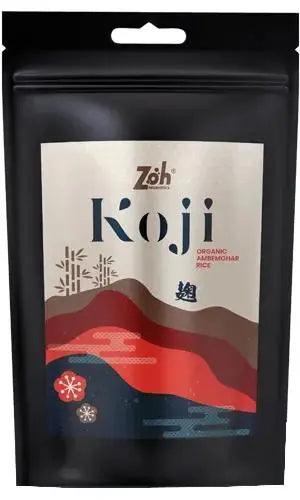
Dehydrated Ambemohar rice koji. Already cultured by Zoh; ready for your recipe.
Culinary imagery shows serving inspiration. See product image for packaging.
JAPANESE FERMENTATION · MADE BY ZOH IN INDIA
Make miso, amazake & everyday umami.
Ambemohar rice cultured with Aspergillus oryzae, then dehydrated by Zoh in India. Ready for your recipe—no rice-culturing stage needed.
Tax included. Delivery availability and charges confirmed at checkout.
Outside India? Planning a professional project?
Ask us about supply to your country →01 / MEET KOME KOJI
Rice koji is rice cultivated with Aspergillus oryzae, a food fermentation mould. Its enzymes help turn starch into sweetness and proteins into savoury flavour.
Use these already-cultured, dried grains to make seasonings, drinks and pastes. Start with shio koji: a seasoning made with rice koji, salt and water.
Find your first koji project →The inoculant used to grow koji on grains. Requires a separate cultivation stage.
THIS IS WHAT YOU GET
Already-cultured Ambemohar rice, dehydrated. Start at the recipe stage.
The seasonings, pastes and drinks you make using rice koji and other ingredients.
02 / THE KOJI KITCHEN
Choose the flavours you love. We’ll show you where rice koji fits.
YOUR FIRST JAR
Your everyday umami upgrade.
Rice koji, salt and water become a versatile seasoning for tofu, vegetables, fish and meat.
Read the shio koji recipe
GENTLE SWEETNESS
Let rice make its own sweetness.
A temperature-controlled preparation lets koji enzymes turn rice starch into sugars. Serve as a drink or use in desserts.
Explore amazake
WORTH THE WAIT
Build flavour you can taste in layers.
Combine rice koji with cooked beans and salt, then follow a tested ageing method. Soups, glazes and dressings start here.
Explore misoCombine rice koji with prepared soy sauce for a rich seasoning. This is different from brewing soy sauce from scratch.
Rice koji supplies starch-converting enzymes; yeast supplies alcoholic fermentation. A specialised brewing recipe and temperature control are essential.
Explore the savoury liquid associated with suitable miso preparations. Traditional tamari processes vary; rice koji is not a universal substitute for soybean koji.
Use finished koji preparations in marinades, glazes, dressings and desserts. Start with a tested base, then make the flavour your own.
Applications require additional ingredients and their own preparation methods. Food images are serving inspiration.
03 / THE ZOH DIFFERENCE
Ambemohar rice → cultured with Aspergillus oryzae → dehydrated rice koji.
Japanese fermentation tradition, made with Indian Ambemohar rice. We manufacture the koji ourselves, so you can speak directly to the people making your ingredient.
We complete the rice-culturing stage. You choose what comes next: an everyday seasoning, a sweet amazake or a slow-aged miso.
A clearly identified Indian rice variety, cultured by Zoh for your koji preparations.
Already cultured and dehydrated. You do not need to inoculate rice or set up a growing chamber.
Ask us about preparation, storage or suitability for your kitchen or food development project.
04 / SMALL GRAINS. REAL SCIENCE.
Koji makes enzymes during cultivation. Those enzymes do useful work when you give them the right ingredients and conditions.
Time, temperature, salt and the other ingredients shape the result. Koji is a culinary ingredient; these enzyme functions are not a promise of probiotic or medical benefits.
Read about koji enzymes at Marukome ↗05 / YOUR FIRST SUCCESS
Shio koji is a practical first project: rice koji, salt, water and a little attention.
Weigh your ingredients. Dried and fresh koji need different amounts of water.
Use clean utensils and follow the recipe’s salt level, temperature and timing.
Use the finished seasoning in marinades and dressings. Adjust other salt in the dish.
Try tofu, roasted vegetables or a simple sauce before exploring longer ferments.
06 / FOR PROFESSIONAL KITCHENS & FOOD BUSINESSES
Looking for a rice koji manufacturer or supplier? Talk directly to Zoh about dehydrated Ambemohar rice koji for your kitchen, ingredient range or food development project.
Tell us your intended application, country and product-information requirements. We’ll discuss suitability and supply options directly with you.
International enquiries welcome. Destination availability, delivery terms and import requirements are confirmed before an order.
07 / KNOW YOUR INGREDIENT

08 / A LITTLE KNOW-HOW
Preparation, storage and choosing your first recipe.
Rice koji is rice cultivated with Aspergillus oryzae, a mould used in food fermentation. Zoh sells the finished cultured rice in dehydrated form, for use in recipes such as miso, shio koji and amazake.
It is finished rice koji, not a spore inoculant. You do not need to grow the mould on a new batch of rice before using it in a recipe.
There is no sourdough-style feeding routine. Use it according to your recipe. Some recipes hydrate the dried grains first; others add the liquid as part of the preparation.
No. Rice koji is an ingredient. Shio koji is a seasoning prepared with rice koji, salt and water.
Often, but not automatically gram for gram. Use a dried-koji version of the recipe or its stated conversion; dried koji contains less water.
Shio koji is an approachable first choice. Amazake is another option if you have equipment that can hold the recipe’s temperature accurately.
Zoh’s dehydrated rice koji has a 12-month shelf life. Follow the best-before date and storage directions on the pack. Keep refrigerated after opening.
Rice koji is used in all three, with different additional ingredients and methods. Sake also requires alcoholic fermentation with yeast; follow a specialised brewing method and local requirements.
Rice koji can be used in appropriate miso-based preparations that yield a tamari-style liquid. Traditional tamari recipes and commercial processes differ; many rely on soybean koji. Choose a method specifically suited to rice koji.
Koji-based amazake is made by enzymatic starch conversion, without deliberately adding alcoholic fermentation. Amazake made using sake lees is a different preparation and may contain alcohol.
No. This product is sold as a culinary fermentation ingredient. Enzyme activity and live probiotic effects are different things; we do not make a probiotic benefit claim for this koji.
This is not sold as a reliable spore starter for propagation. Use food-grade koji spores if your aim is to grow new koji on rice.
Rice itself does not contain gluten, but an ingredient’s identity is not a finished-product allergen certification. Contact us about your requirements before ordering, and check every ingredient in your final recipe.
We welcome international supply enquiries. Contact us with your country and intended use so we can confirm current availability and delivery terms. An enquiry does not imply that checkout delivery is enabled everywhere.
A REAL PERSON, WHEN YOU NEED ONE
Not sure about the texture? Wondering if you used the right recipe? Send us a photo, your ingredients, timing and temperature. We’ll help you work through it.
Send us your batch photo →
Include your order number and a clear photo of the pack and preparation. Please don’t taste a batch you suspect may be spoiled.
Read our replacement policyONE INGREDIENT. SO MANY NEXT CHAPTERS.