
Tea worth brewing.
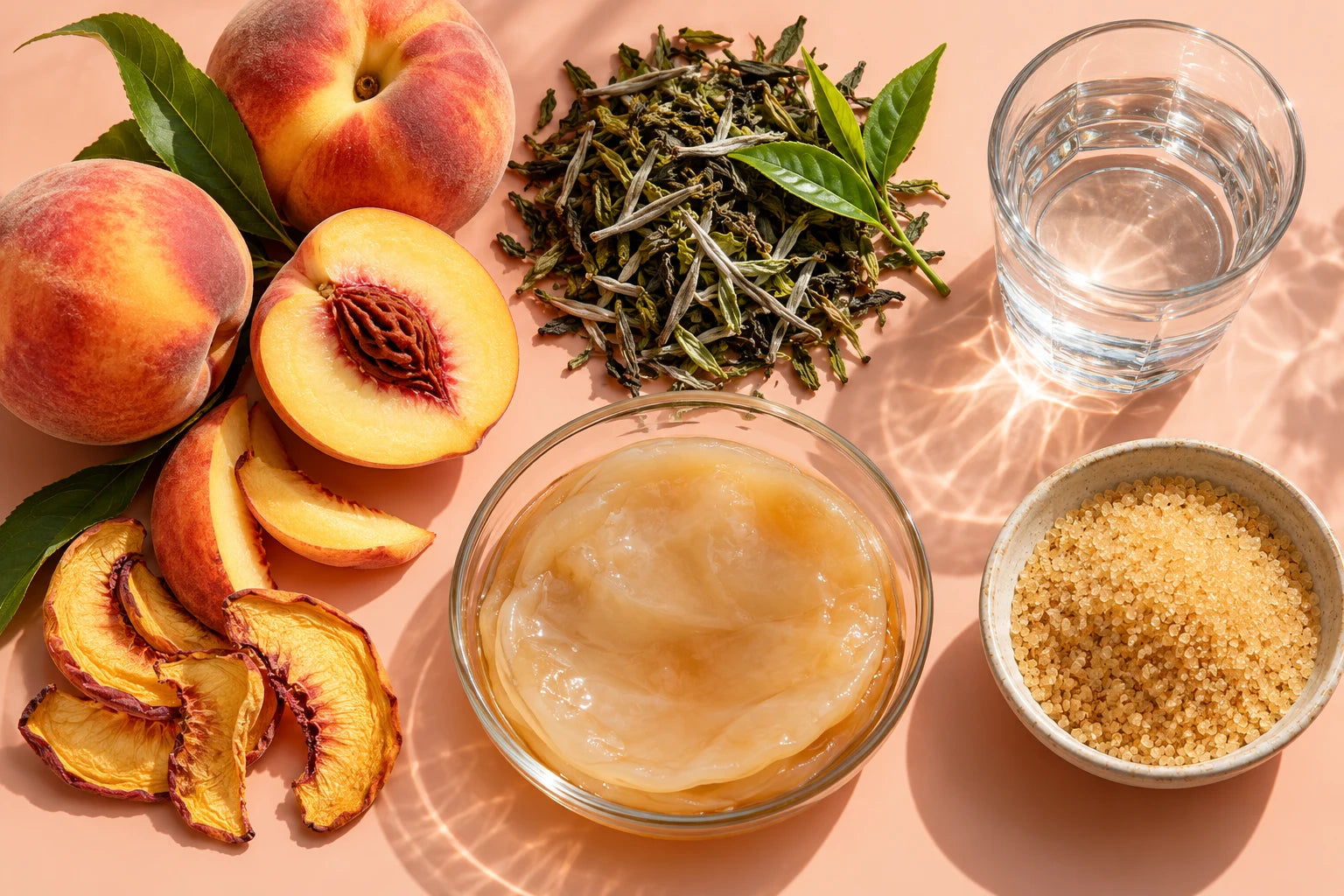
Green and white tea, filtered water and sugar set the stage for fermentation.
Cart
Your cart is empty

Raw & unpasteurised · 330 ml glass bottles
Your little sip of sunshine.
Soft peach. Gentle sweetness. A refreshing tang.
Peaches, dried in-house.
The way it’s made matters
We choose real ingredients.
We give them time to ferment.
And we keep our kombucha raw.

Real fruit and florals across the Zoh range.
In this bottle, it’s all about peach.
These are Zoh’s brewing choices, not claims about every other brand. Filtering the finished drink is different from filtering the brewing water. Shelf life or added carbonation alone does not establish whether a drink is genuinely fermented. Zoh Peach is raw, unfiltered and unpasteurised, and should be kept refrigerated.
Good taste starts here
Peaches bring the character.
Tea and culture build the brew.
Full of flavour.
The Zoh way
We brew tea with a kombucha culture, then bring in real peach character. The result? A bright, complex drink with the tang of real fermentation.
Founded by nutrition scientist Salonii Hamirwasia.
Meet the people behind Zoh ↗
 Honestly brewed. Happily poured.
Green and white tea, filtered water and sugar set the stage for fermentation.
Bacteria and yeast transform sweet tea, developing kombucha’s distinctive tang.
Unfiltered and unpasteurised. Real peach flavour, in our signature glass bottle.
Beyond the ingredient list
A whole world of tea chemistry,
fruit character and fermentation.
Meet the small things behind the sip.

Ingredient compounds illustrated · not to scale. Amounts in the finished drink vary and have not been measured.
EGCG is one of tea’s naturally occurring catechins. Researchers have measured EGCG and other polyphenols in kombucha, with levels varying between brews.
Peaches naturally contain phenolic compounds, including chlorogenic and neochlorogenic acids. Drying, brewing and fermentation can change what reaches the finished drink.
Acetic acid bacteria are important kombucha fermenters. In studied cultures they help transform fermentation products into organic acids and build the cellulose layer of a SCOBY.
Yeasts help break down and ferment sugars, producing carbon dioxide and alcohol. They work alongside bacteria to shape the brew.
Acetic and gluconic acids are among the organic acids measured in kombucha studies. They help shape the drink’s acidity and sharp finish.
A guide to compounds studied in ingredients and kombucha. Exact amounts and microbial species in this Zoh bottle have not been characterised here.
Researchers measured tea polyphenols, including catechins, in commercial kombuchas. Their concentrations varied between products. This is evidence about tested drinks, not an assay of Zoh.
Commercial kombucha analysis, 2022 · Read the original study ↗A study of peach cultivars identified phenolic compounds such as chlorogenic and neochlorogenic acids. Fruit composition does not establish their amounts after brewing and fermentation.
Peach cultivar research, 2022 · Read the original study ↗Bacteria and yeast form a changing fermentation community. Species identified in a research culture should not be treated as a strain list for every kombucha.
Microbial community research, 2020 · Read the original study ↗Laboratory analysis identifies organic acids formed during fermentation. Concentrations depend on ingredients, culture and brewing conditions.
Fermentation chemistry research, 2020 · Read the original study ↗A study in 11 healthy adults examined a kombucha consumed with a meal. It is an early, small study of a different product, not proof of a health outcome from Zoh.
Small crossover meal study, 2023 · Read the original study ↗Know your bottle
330 ml of Peach Kombucha.
Triple UV filtered water, blend of green and white tea, active kombucha culture, dehydrated peach and organic sulphur-free sugar.
No artificial flavours or preservatives.
| Nutrient | Per 100 ml | Per bottle · 330 ml |
|---|---|---|
| Energy | 18.18 kcal | 60 kcal |
| Total fat | 0.00 g | 0 g |
| Saturated fat | 0.00 g | 0 g |
| Trans fat | 0.00 g | 0 g |
| Sodium | 6.06 mg | 20 mg |
| Carbohydrate | 4.24 g | 14 g |
| Dietary fibre | 0.00 g | 0 g |
| Total sugars | 4.24 g | 14 g |
| Added sugars | 4.24 g | 14 g |
| Protein | 0.00 g | 0 g |
Calculated from the label’s 165 ml serving. Values are rounded; refer to your bottle for batch information.
Zoh serving ideas
A slow lunch. Friends dropping in.
Something lovely in your glass.
Fresh mint. Juicy peach. A bright squeeze of lime.
Make this drink ↗A fragrant citrus twist for a warm afternoon.
Make this drink ↗A fruit-forward pour with dry white wine.
Make this drink ↗On the table:Try Peach with paneer tikka, corn chaat or weekend brunch.
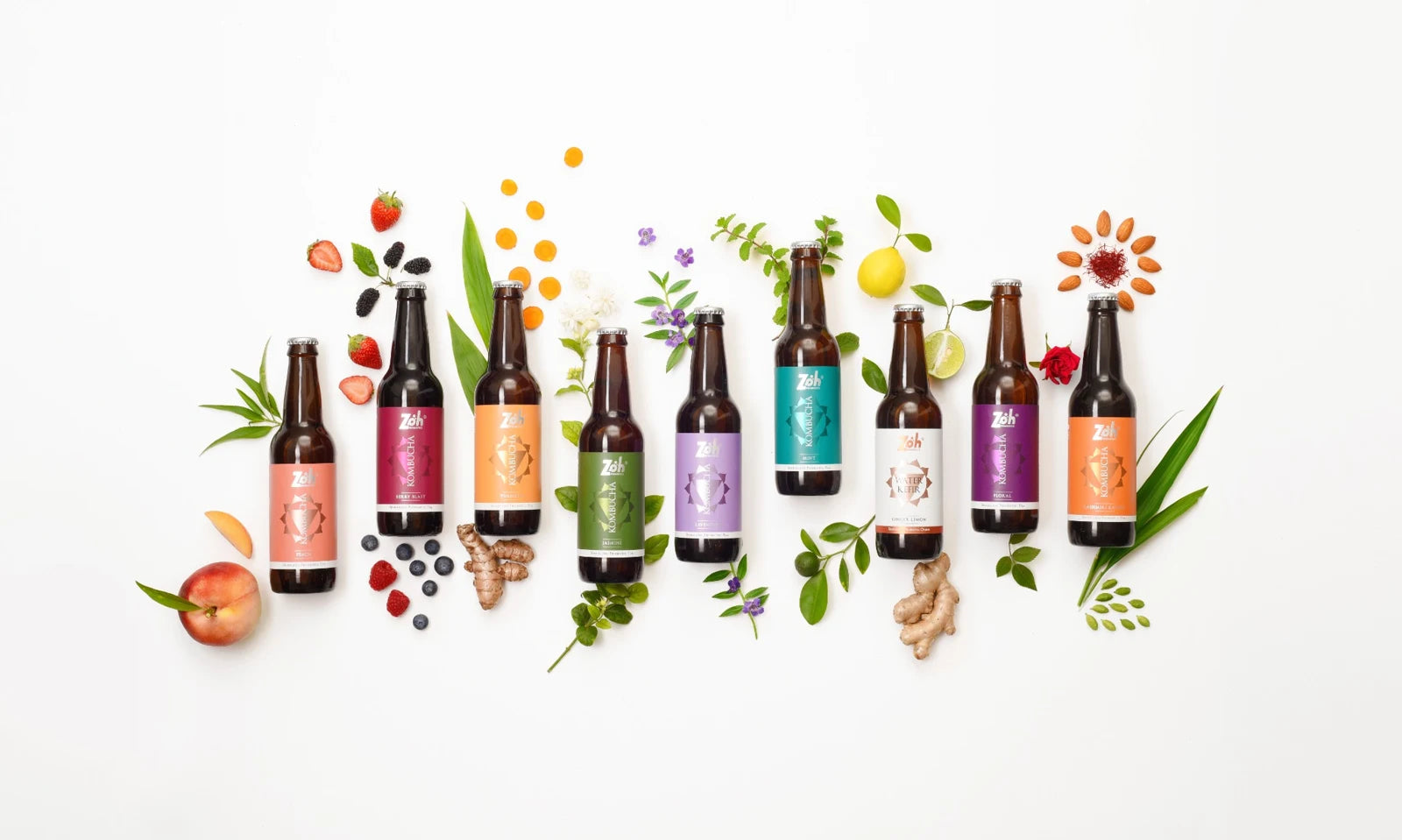
Find your kind of kombucha
Find the flavour that feels like you. Meet the whole range with eight kombuchas and Ginger Lemon Water Kefir.
Try the 9-bottle sampler ↗9 × 330 ml bottles · Explore current pack options
Reviews from Zoh drinkers
Reviews are shared across Zoh’s bottled drinks and sampler packs, so you may see other flavours here.
Zoh Science Corner
Explore the tea, the culture
and the research behind kombucha.
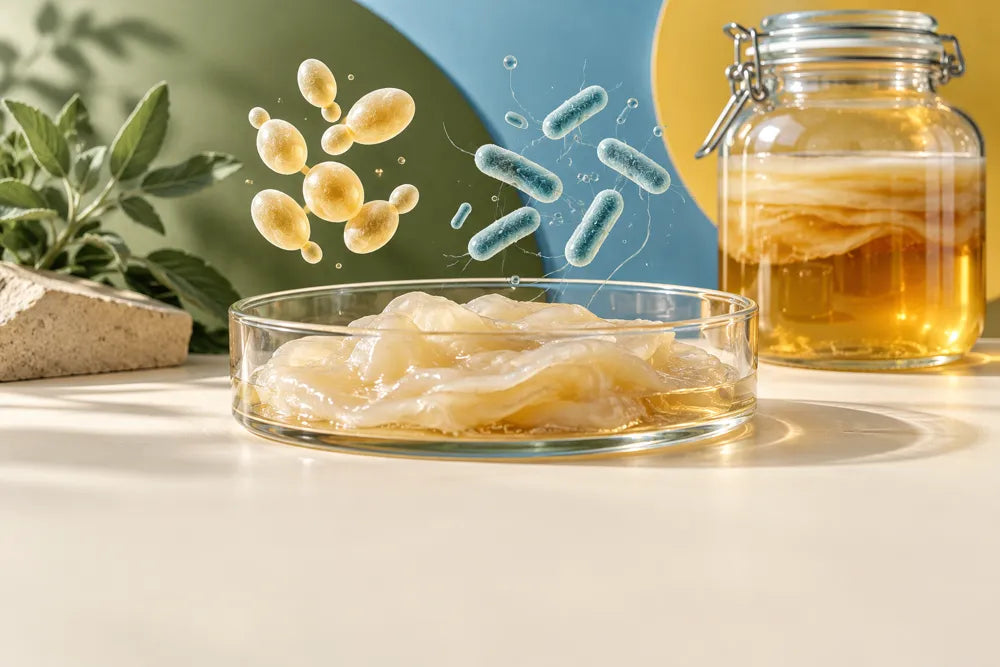
How bacteria and yeast work together in fermentation.
See research notes ↓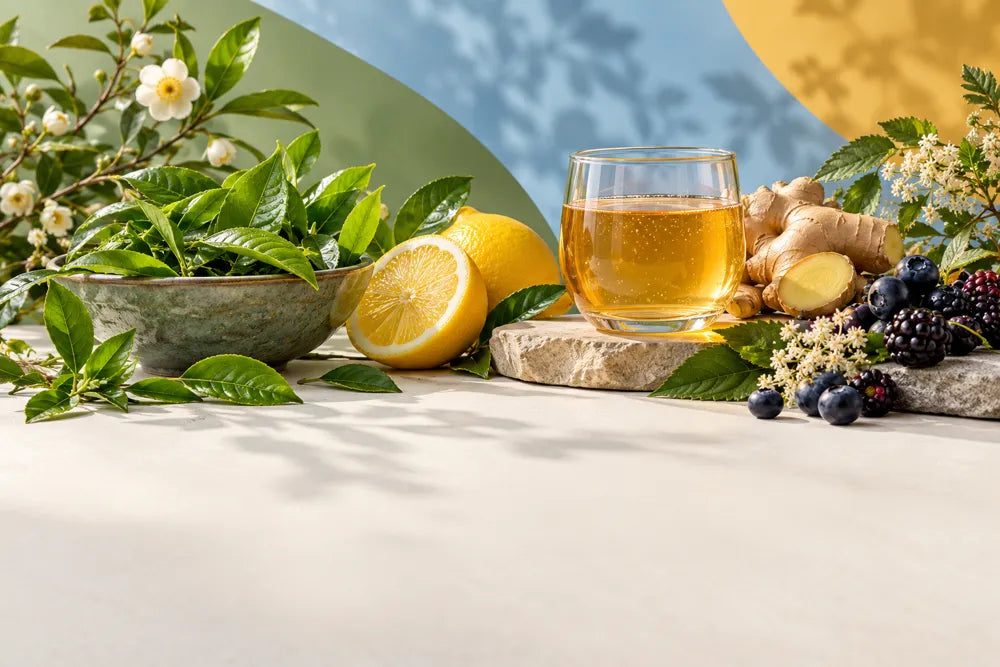
Tea, fruit and botanicals: the chemistry behind the character.
See research notes ↓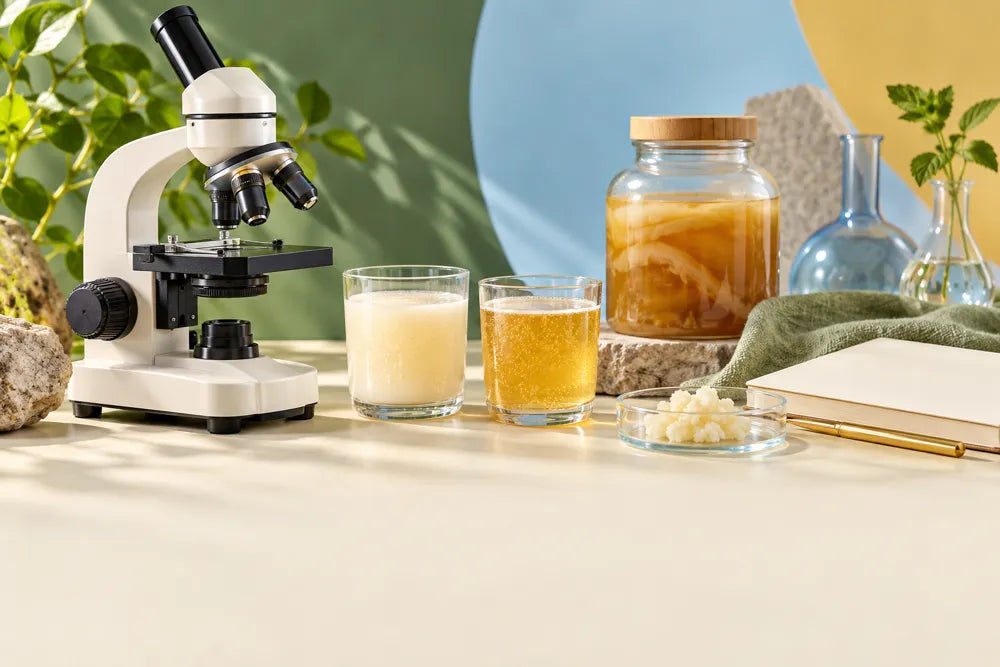
What studies can tell us—and what they cannot.
See research notes ↓Short explanations. Original studies. Room to explore.
Explore the research sources ↗Before your first sip
Choosing, chilling, pouring.
Here’s what’s useful to know.
Zoh Peach Kombucha: Soft peach. Gentle sweetness. A refreshing tang. Made with peaches, dried in-house.
Start with a small pour and see how it suits you; there is no established universal daily dose. A 330 ml bottle need not be one serving. The Peach nutrition label uses a 165 ml serving. Read our guide to kombucha and your first bottle.
There is no established best time to drink kombucha. Enjoy Peach chilled with lunch, as an afternoon drink or alongside food. If acidic drinks bother your stomach, try a small amount with a meal rather than on an empty stomach.
Yes. Serve Peach chilled over ice, or try our Peach serving ideas and recipes. Add it last to keep more of the fizz. Fermentation can leave small amounts of alcohol even when no spirits are added.
The displayed Peach label gives 7 g of sugar and 30 kcal per 165 ml serving. That works out to 14 g of sugar and 60 kcal per 330 ml bottle, or approximately 4.24 g and 18.18 kcal per 100 ml. See the nutrition table and original label.
Yes. Zoh Peach is brewed with green and white tea, so some caffeine can remain after fermentation. It is not a caffeine-free drink. The amount depends on the tea and brewing process.
Not necessarily. Kombucha fermentation can produce small amounts of alcohol, so “fermented tea” should not be read as “zero alcohol”. Refer to the current bottle and batch information if alcohol content matters to you.
The finished kombucha is unfiltered and is not heat-pasteurised after fermentation. Filtering the brewing water is a different step. This bottle gets its flavour from peaches, dried in-house.
Kombucha brings together tea compounds, fermentation products and a microbial community. Human research is still developing, and findings from one kombucha cannot automatically be applied to every bottle. Explore our science guide and original studies for the evidence behind the discussion.
Raw kombucha is unpasteurised and can contain alcohol and caffeine. It is not a suitable choice for young children or during pregnancy. If you are immunocompromised, take medicines that interact with alcohol, or need to avoid alcohol completely, seek individual medical advice before drinking it.
Yes—keep Zoh Peach Kombucha refrigerated. Shelf life is 90 days under refrigeration; check the best-before date on your bottle. Refrigerate it on arrival. After opening, keep it capped and refrigerated and follow any opening instructions on the label.
Sediment and yeast strands can occur in unfiltered kombucha. They do not, by themselves, prove either quality or spoilage. If a bottle has a damaged seal, visible mould or an unusual appearance you are unsure about, do not drink it;send Zoh a photo and the batch details.
Chill the bottle thoroughly, keep it upright and do not shake it. Open slowly and carefully to release pressure. Natural fermentation and warm storage can change carbonation, so a bottle may be fizzier than the last one.
Zoh’s bottled kombucha is available to order online for delivery within India. Shipping is free within India. Enter your address at checkout to confirm delivery availability. Each Peach bottle contains 330 ml.
Choose a Peach pack if you enjoy soft peach and a refreshing tang. To explore the range, try the 9-bottle sampler: eight kombuchas plus Ginger Lemon Water Kefir. You can also build your own flavour box.
Picking a flavour or have a question about your bottle? Talk to Zoh.
